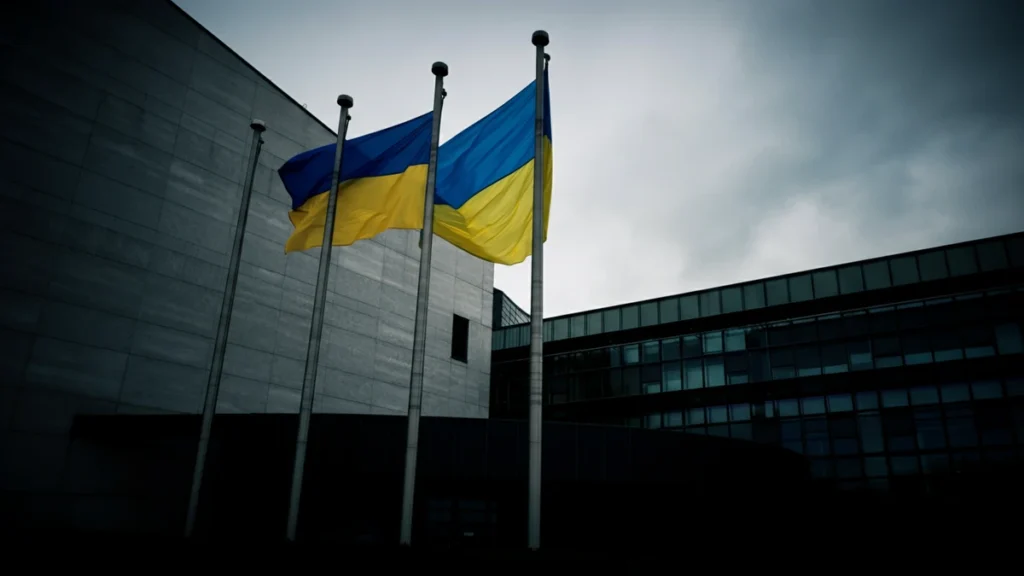
The European Parliament building in Brussels with the EU and Ukrainian flags flying together under an overcast sky. | MW3.biz
The Shifting Sands of Global Power
The European Union is undergoing a major geopolitical shift. This transformation is arguably the most significant since its founding. A mix of crises is forcing the 27-member bloc to rethink its global role. These include a major war on its eastern border, big changes in internal politics, and growing economic competition. For decades, the EU mainly used trade and regulation to project power. Now, it must think and act more like a traditional power player. Understanding EU geopolitics is no longer just for academics. It’s vital for understanding the future of global security, trade, and diplomacy.
The full-scale invasion of Ukraine by Russia lies at the heart of this new reality. This aggression ended Europe’s post-Cold War peace. It also forced a fundamental review of the continent’s security structure. At the same time, the 2024 European Parliament election results have shocked the political establishment. Nationalist and far-right groups have gained power. These groups challenge the very foundations of European integration. The bloc faces both internal and external pressures. Its relationship with global powers like the United States and China remains uncertain. This makes studying EU geopolitics more crucial than ever.
The War in Ukraine: Europe’s Security Realignment
The Russo-Ukrainian War has been a harsh wake-up call for the European Union. The conflict created a massive humanitarian crisis. It also highlighted Europe’s military weaknesses and its past reliance on Russian energy. In response, the EU has acted with unusual speed and unity. European Commission President Ursula von der Leyen and other leaders have imposed sweeping sanctions against Moscow. They have also provided billions in financial and military aid to Kyiv. Millions of Ukrainian refugees have been welcomed.
This crisis has strengthened the NATO alliance. It has also pushed EU member states to significantly boost their defense spending. Nations like Germany, which long held a post-war policy of military restraint, have announced historic investments in their armed forces. The EU itself has broken new ground. It is using its common budget through tools like the European Peace Facility. This funds the purchase and delivery of weapons to a non-EU country. This marks a clear shift from its traditional ‘soft power’ role. It’s a major change in EU geopolitics. The war has also sped up the debate on EU enlargement. Ukraine and Moldova are now official candidates for membership. This move will reshape the continent’s map for decades.
The Rise of the Far-Right and Internal Divisions
The external threat from Russia has created some unity. However, internal political divisions seriously threaten the EU’s cohesion. The 2024 European Parliament election delivered a clear message. Far-right and nationalist parties made significant gains across the continent. In France, Marine Le Pen’s National Rally achieved stunning success. This prompted President Emmanuel Macron to call a high-stakes snap legislative election. In Germany, the Alternative for Germany (AfD) became the second-largest party, despite various scandals.
In Italy, Prime Minister Giorgia Meloni and her Brothers of Italy party strengthened their power. This positions her as a key powerbroker in Brussels. This shift to the right is fueled by various voter concerns. These include anxieties over immigration, the cost of living, and the economic burdens of the green transition. The new political landscape in the European Parliament will make it harder to pass ambitious laws. This is especially true for climate change and migration reform. It complicates the traditional centrist coalition’s ability to govern. This could lead to policy gridlock. Such a situation would weaken the EU’s capacity to respond decisively to geopolitical challenges.
Economic Headwinds and the Quest for Strategic Autonomy
The European Union also faces significant economic challenges. These are central to its geopolitical standing. The urgent need to end reliance on Russian fossil fuels has accelerated the European Green Deal. This is a comprehensive plan to achieve climate neutrality. However, this transition comes with huge costs. It is also creating social and political friction.
The EU finds itself in a tough economic spot between the United States and China. The American Inflation Reduction Act (IRA) offers massive subsidies for green technology. This has raised fears in Europe of deindustrialization. Companies are being lured across the Atlantic. In response, the EU has debated its own industrial policy to boost competitiveness. At the same time, its relationship with China has become more complex. The EU calls China a partner, competitor, and systemic rival. This reflects a difficult balancing act. The bloc is pursuing a “de-risking” strategy. It aims to reduce critical dependencies on China. This is especially true for semiconductor and raw material supply chains. However, it seeks to do this without completely cutting ties with China’s vast market. This careful approach is key to modern EU geopolitics. The EU strives for “strategic autonomy.” This means the ability to act independently on the world stage.
Why EU Geopolitics Matters to the World
Brussels’ internal struggles and strategic decisions have deep global consequences. The European Union remains the world’s largest single market and a regulatory powerhouse. Its policies on data privacy (General Data Protection Regulation), competition, and climate standards often set the global benchmark. This phenomenon is known as the “Brussels Effect.” When the EU bans products made with forced labor or imposes a carbon border tax, companies worldwide must adapt.
A fragmented and economically struggling Europe would be a less reliable partner for the United States. It would also be a less effective counterweight to authoritarian powers like Russia and China. Many global factors depend on a cohesive and proactive EU. These include the stability of global supply chains and the future of international trade rules under the World Trade Organization. The collective effort to combat climate change under the Paris Agreement also relies on the EU. The outcome of the 2024 US presidential election adds another layer of uncertainty. Donald Trump’s potential return could further strain transatlantic relations. This would force Europe to become even more self-reliant.
This regulatory influence remains a key part of its global strategy. Major legislation like the EU AI Act is set to reshape the worldwide technology landscape.
Stay Informed on Global Affairs
The world is changing fast, making it more important than ever to stay informed. Understanding the forces that shape our world is key. This includes political shifts in Europe, technological advancements, and economic trends. For creators, entrepreneurs, and forward-thinkers, having the right tools to navigate this landscape is crucial. Discover how you can build, create, and innovate by exploring the resources available at MW3.biz.