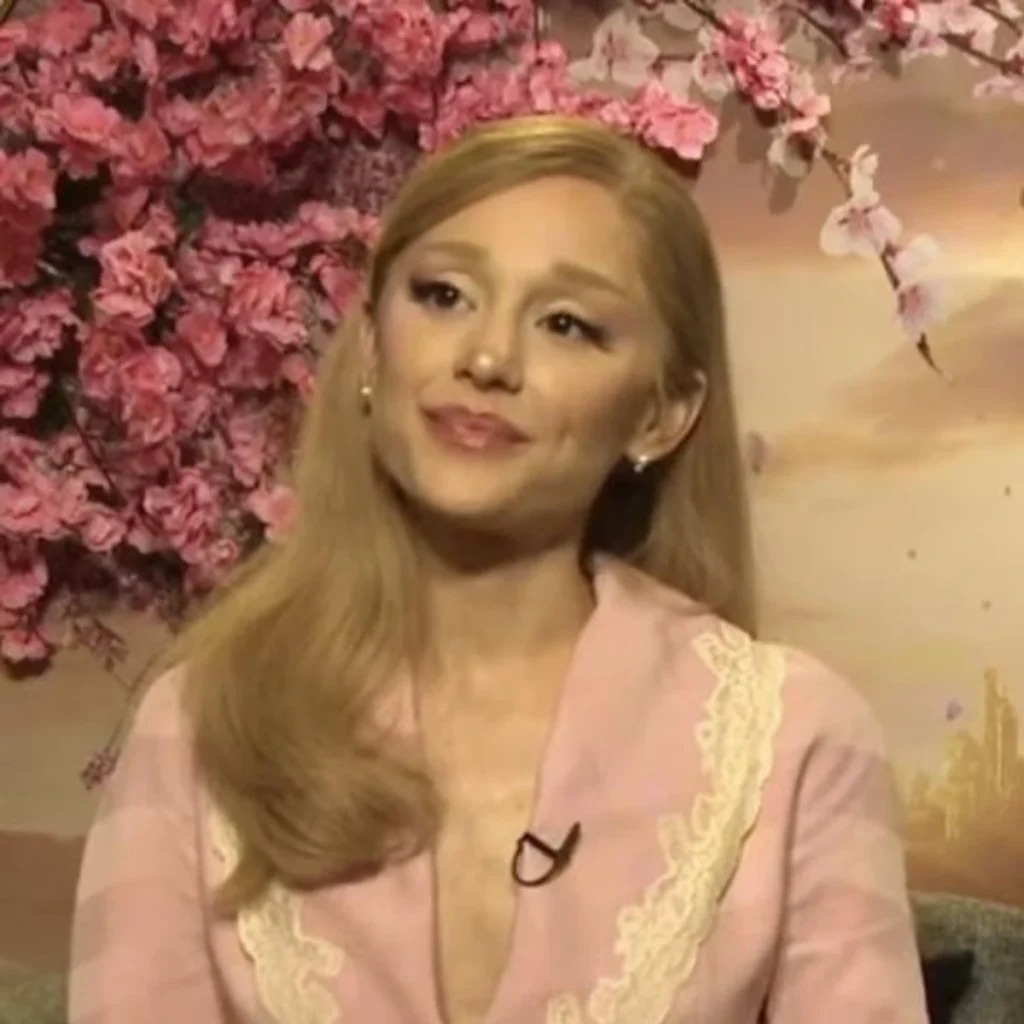
Ariana Grande is closing out a blockbuster stretch of her career with a new album – and she has already sent its calling card to the top of the charts. Petal, her eighth studio album, arrives on July 31, led by a single that has topped the charts on both sides of the Atlantic.
That single, hate that i made you love me, gives Ariana Grande’s Petal exactly the launchpad a major pop release wants: a No. 1 on the US Billboard Hot 100 and the UK Singles Chart alike, confirming that after a detour into film she remains one of the most commercially potent artists in music.
Released on her own imprint, feature-free and stylized in her signature lowercase, Petal looks less like a bid for reinvention than a confident statement from an artist entirely in command of her own career.
A No. 1 to Lead the Way
The album’s momentum starts with its lead single. Hate that i made you love me came out on May 29 and quickly climbed to the top of both the US and UK charts, a transatlantic double that few singles achieve and a strong signal of the appetite for new Grande material.
Musically, it blends the sounds she has made her own – pop and alt-pop threaded with R&B, synth-pop and downtempo textures, with a hint of trap in its production. It is a track built for both radio and headphones, and its chart performance suggests it struck the balance between familiar and fresh that a comeback single needs.
The title itself hints at the album’s emotional register. Hate that i made you love me is the kind of knotty, contradictory sentiment – regret and desire tangled together – that has run through much of Grande’s most resonant work. Leading with it, rather than something purely triumphant, suggests Petal will trade in the same bruised, confessional pop that has kept her connected to a devoted audience through every phase of her career.
What Petal Is
Petal is Grande’s eighth studio album, released through her own imprint Babydoll Music in partnership with Republic Records. She has been teasing it since April, building anticipation across the spring before the July release.
The record’s shape is telling. It runs to a lean 12 tracks, all stylized in lowercase in keeping with the understated branding she has favoured in recent years, and it carries no guest features – an increasingly rare choice in an era of collaboration-heavy releases. A feature-free album puts the whole weight of the record on the artist herself, a decision that reads as both a creative and a confidence statement.
The lowercase styling is more than an affectation. Since her 2019 run of albums, Grande has leaned into a deliberately soft, intimate visual language – all hushed lettering and muted palettes – that frames her music as personal rather than bombastic. The name Petal fits neatly into that aesthetic, evoking something delicate and unguarded, and it sets an expectation for the record before a note is heard: quiet on the surface, with feeling underneath.
The Team Behind It
Grande did not build Petal alone, but she built it with a tight, trusted circle. She co-wrote and executive produced the album with Ilya Salmanzadeh, known as ILYA, a longtime collaborator whose fingerprints are on much of her most successful work. Their partnership is the album’s creative spine.
On the lead single, they were joined by Max Martin, the Swedish super-producer behind a staggering run of pop No. 1s across decades. Reuniting Grande with Martin for the album’s opening statement is a signal of intent: this is a pop record made by people who know exactly how to make hits, working with an artist at the height of her powers.
The Grande-Salmanzadeh-Martin combination has a long track record. Together and in various pairings, they have been behind some of the defining pop songs of the last decade, and their continued collaboration is a reminder that behind the biggest solo stars usually sits a remarkably stable creative team. For an album billed as feature-free, that production partnership is, in a sense, the real collaboration at its heart – a shorthand between artist and producers built over years of hits.
Coming Off Wicked
Petal also marks a return. In the years since her last album, Eternal Sunshine, Grande took a substantial detour into film, starring in the big-screen adaptation of Wicked – a role that expanded her audience and reminded the world of her range as a performer beyond the recording booth.
Coming back to music full-time after that success is its own kind of pivot. Some artists struggle to re-establish their footing after a high-profile acting turn; leading with a chart-topping single suggests Grande has done the opposite, using the raised profile to make her musical return land even harder. Petal is the sound of her stepping back onto her home turf.
There is a neat symmetry to the timing, too. Wicked introduced Grande to audiences who may have known her only as an actress, and a chart-topping pop single is the most direct way to convert that curiosity into streams and sales. Stars who can move fluidly between a hit film and a No. 1 record are rare, and Grande’s ability to do both, back to back, is a large part of why she has stayed at pop’s centre for so long. It also gives Petal a built-in audience beyond her existing fanbase – filmgoers primed to follow her back to the music that made her famous in the first place.
The Sound and the Statement
Beyond the songs, Petal is a statement about control. Releasing the album on Babydoll Music, her own imprint, reflects the leverage a superstar of her stature has earned – the ability to shape not just the music but the machinery around it. The lowercase styling, the absence of features, the tight tracklist: each is a small assertion of authorship.
That matters in a pop landscape where artists increasingly fight to own their narratives and their catalogues. An album that is unmistakably one person’s vision, made with a handful of trusted collaborators and released on her own terms, is a model many of her peers aspire to. Whatever the songs ultimately say, the framework around them says plenty about where Grande sits in the industry.
A Packed Pop Summer
Petal arrives into a summer crowded with major releases, part of a wave of big-name albums competing for attention – a season that has also seen a celebrated dance-pop return from another of pop’s defining figures. In that context, leading with a transatlantic No. 1 is a way of planting a flag before the album even lands.
For Grande, the release caps a period in which she has proven herself across music and film, and Petal is her reassertion of the lane where she first became a star. With a chart-topping single already in hand, a lean and personal album on her own label, and her core creative team around her, she is releasing it from a position of strength. The only question left is how far Petal itself climbs – and, on the evidence of its first single, the answer is likely to be very high indeed.