
The Life We Dreamt of: Davion Gowie on Time, Money and Faith
The Jamaican Author and D Signature Artist Sets the World’s Moral Codes Side by Side
Most people met Davion Linton Gowie as a voice before they met him as an author. Born in the parish of Saint Mary, Jamaica, and writing from London, he has spent the past decade releasing dancehall, reggae and R&B as D Signature. His second book, The Life We Dreamt Of!, is short, plainly written and built around a proposition most readers will want to argue with: that time, not a figure in the sky, is God.
Inside The Life We Dreamt Of, a Short Book With a Large Claim
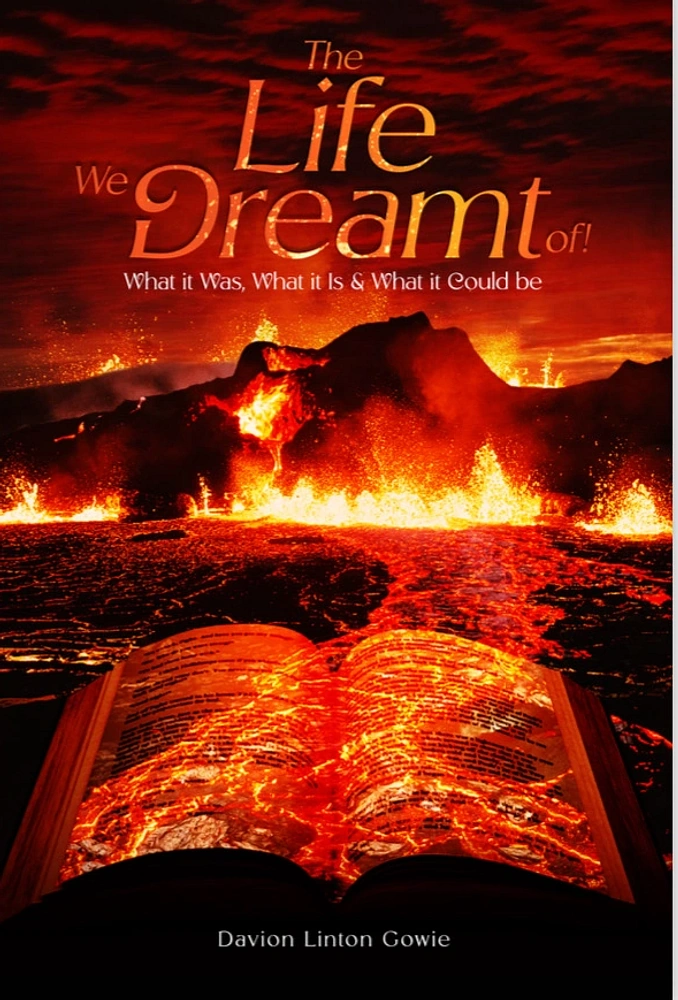
The full title is The Life We Dreamt Of!: Wise thoughts of what it was, what it is for us, and what it could be Catechism, and every part of that mouthful is load bearing. The three tenses give the book its spine, and the word catechism gives it its method.
A catechism is instruction by question and answer, the form traditions use to hand faith down the generations. Davion Linton Gowie takes that form and runs it backwards. Instead of supplying settled answers, he reopens the questions he was given as a child in Jamaica and sets his own conclusions beside the inherited ones, leaving the reader to compare.
What The Life We Dreamt Of Argues
The central claim arrives early. When Gowie says time is God, he does not mean a clock. He means the force everything is born into and dies inside, the one that shaped the oceans and the planets and that nothing living has ever escaped. He then holds it against the attributes religion assigns to God: present everywhere, knowing everything, powerful over everything, showing no favouritism. Time, he argues, demonstrably has them, and no amount of money buys an exemption.
From there the book widens. A chapter on the paradox of money argues that survival now depends on the very thing scripture warns us against loving, so the system manufactures the attachment it later condemns. Another section lays the five precepts of Buddhism, Hindu principles and disciplines, the commandments as held by Jewish, Orthodox, Anglican, Catholic, Protestant and Mormon traditions, and the manners of the Quran next to one another, so a reader can count the overlaps. As in his first book, he closes in verse.
The dedication is unusually wide, reaching fellow spiritualists, friends and family, people who have not recognised God at all, and the fortunate and unfortunate alike. That breadth shapes the register: the book argues rather than preaches, and it stays short enough to read in an evening. Gowie published The Life We Dreamt Of! in January 2025, and it now sells as an ebook and in paperback on Amazon.
From Lyrics at Sixteen to a Catechism Written on Site
Gowie wrote his first song at sixteen and still describes himself first as a lyricist. Recording as D Signature, he writes, records and produces his own material, and his best known tracks include the spiritually minded Jah Protection and Chances, a duet with Nikol Brown that SLASH MUSIC covered earlier this year. He names Bob Marley, Vybz Kartel, Popcaan and Tommy Lee Sparta among his influences, a lineage that never treated serious argument and a rhythm people want to move to as opposites.
Two Books, One Question
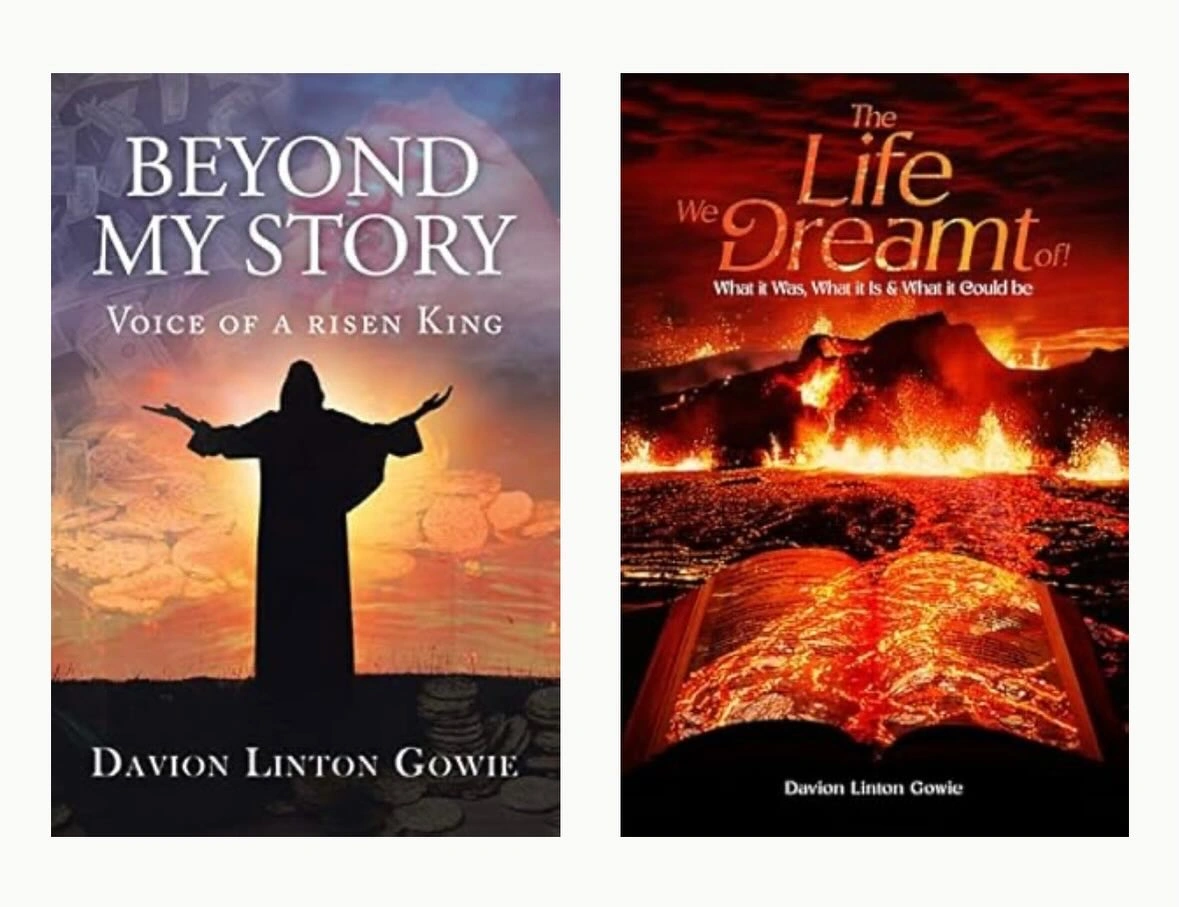
The books grew from the same impulse. Beyond My Story: Voice of a Risen King arrived in 2019 and worked through marriage and divorce, money and material possessions, and the place of religion, ending with poems and lyrics. The Life We Dreamt Of! turns those questions outward and asks them about everyone.
What gives the second book its flavour is where he wrote it. Gowie is studying for a computing degree at the University of Wales Trinity Saint David in London and works in painting and decorating on construction sites. He is explicit that this matters, because much writing about money and society comes from people who have never had to think hard about either. Computing, meanwhile, sharpened the habit of applying logic to questions people usually answer with feeling.
From the MW3.News editorial team: “What holds the book together is the method rather than the conclusion. Gowie sets Buddhist precepts, Hindu disciplines, the commandments and the manners of the Quran on one page and lets a reader count the overlaps. That is a genuinely useful thing to hand someone, whichever side of belief they are standing on.”

In Conversation With Davion Linton Gowie
We put sixteen questions to Gowie about the claim at the centre of the book and the objections it invites.
Writing The Life We Dreamt Of
Q. For a reader meeting you for the first time, what is The Life We Dreamt Of, and who did you write it for?
It is a short book of reflections on where we came from, where we are now and where we could still go. I did not set out to write a work of theology or a self-help book. I set out to put down honestly what I have concluded about God, time, money and the way we live, in language that anyone can read in an evening.
The dedication says who it is for better than I can. It is for fellow spiritualists who believe in God, for my friends and family, and equally for the people who have not recognised God at all. It is for the world of heavy hearts and broken people, and for the fortunate and the unfortunate alike. I did not want a book that only speaks to people who already agree with me.
Three Tenses and the Word Catechism
Q. The subtitle is what it was, what it is for us, and what it could be. Why frame the whole book as those three tenses?
Because that is the shape of every honest question about life. You cannot judge where we are without knowing what we came from, and you cannot ask for something better without describing it. Most of the arguments people have about religion, race and money are really arguments about one of those three tenses while pretending to be about another.
The title itself points at the gap. The life we dreamt of is not the life most people are living. I wanted the reader to feel that gap in the title before they read a single page.
Q. The word Catechism sits in the title. What are you catechising, and who is asking the questions?
A catechism is how faith gets handed down: someone asks, someone answers, and the answers harden into doctrine. I use the word deliberately, because I am doing the same thing in reverse. I am asking the questions that the catechisms of my childhood answered too quickly, and I am putting my own answers next to theirs so the reader can compare them.
The reader is the one asking, really. I am not ordaining anything. What I want is a coherent understanding, one a person can hold without having to switch their reason off.
Why Time Is God
Q. The book’s central claim is that time is God. What do you mean, and how did you arrive there?
When I say time I do not mean the ticking of a clock. I mean the force that everything is born into and dies inside, that shaped the earth and the oceans and the planets, and that no living thing has ever escaped. Look at the qualities we are taught to attribute to God: present everywhere, knowing everything, holding power over everything, showing no favouritism. I have never witnessed a person who has those qualities. I witness time having them every day.
Time is not prejudiced. It does not care about your age, your race or your gender. It gives you your life and it takes the breath out of your body, and no amount of money or power buys you an exemption. You can change the time on a clock, but nobody can stop time. That is the closest thing to a god I can actually observe.
The Maverick, Free Will and Fear
Q. You call yourself the maverick throughout the book. What exactly are you dissenting from?
From being told to accept, without question, a superhuman I have never seen and that nobody alive can honestly say they have seen. I am not attacking anyone’s faith. I hold faith myself, and I pray. What I object to is being asked to stop reasoning at the door.
The maverick is just a man with his own mind who still believes in God and still tries to live righteously. I would rather arrive at belief through logic and observation and end up somewhere unfashionable than repeat something I do not understand.
Q. You write that you want nothing to do with a God who casts people into a lake of fire. That will unsettle some religious readers. What do you say to them?
I would say read the question rather than the tone of it. If we were created with free will, and free will means we will sometimes choose wrongly, then punishing us eternally for using the thing we were given seems to me a contradiction, not a mystery. A God capable of anything could surely resolve it another way, or could simply have made us to fulfil his will in the first place.
I am not telling anyone their faith is worthless. I am saying that fear is a poor foundation for it. If God does not want us to fear, I do not understand why so much of what we are taught runs on fear. Those are the questions I could not put down, so I wrote them down instead.
Money, Ownership and What The Life We Dreamt Of Asks
The Paradox of Money
Q. You call money an evil element, and yet you also say survival depends on it. How do you live inside that paradox?
That is exactly the trap. People quote that the love of money is the root of all evil, but if your survival depends on money then a certain attachment to it is not a moral failing, it is self-preservation. The system manufactures the love it then condemns you for.
What we actually need is food, clothing and shelter, and the raw materials for all of those come from the earth at no cost. Money is a small piece of material we invented and then placed between people and the things the earth already gave them. I use money like everyone else. I just refuse to pretend it is natural.
Incentives and Ownership
Q. You list professions that depend on other people’s misfortune: police and lawyers needing crime, doctors needing patients, gravediggers needing death. Is that cynicism, or a diagnosis?
It is a diagnosis, and I am not accusing individuals. There are good doctors and good officers. I am pointing at the incentive underneath the job. When a person’s livelihood depends on a problem existing, we should not be surprised that the problem never quite disappears.
The builder benefits when the maintenance never ends. That is not a conspiracy, it is how we designed the thing. Once you see it, you start asking what a society would look like if we paid people to prevent rather than to cure.
Q. One line stands out: nobody should own three houses while others are homeless and paying rent. What would you actually change?
Ownership. Families around the world deserve to own the ground they live on rather than paying rent for ever to someone who feels superior for holding the deed. Material wealth matters, but a home and land are a different kind of wealth. They are the base a family builds a life on.
I am not calling for anyone’s property to be seized. I am asking why we accept a system where accumulation at one end guarantees homelessness at the other, and then call that outcome natural.
One Book, Many Faiths
Q. A large part of the book lays the precepts of Buddhism, Hindu disciplines, the commandments and the manners of the Quran alongside each other. Why put them all in one book?
Because when you read them next to each other you notice how much they agree. Do not kill. Do not steal. Do not lie. Do not exploit. Live in harmony with other creatures. Different names, different rivers, different books, and largely the same moral floor.
We are taught these traditions as rivals. Laying them side by side was the simplest way to show a reader that the thing we fight over is mostly the packaging. The Bible, the Quran and the Torah all carry valuable principles for moral living. I wanted them on the same page so nobody could pretend otherwise.
Q. You argue we should adopt the good principles of one another’s beliefs. What does that look like on a Sunday morning, practically?
It looks like keeping your own practice and dropping the contempt. Go to your church, your mosque, your temple. Then be honest that the person in the other building is working from nearly the same list of instructions you are.
Practically I would want three things: an open mind, a willingness to learn our actual history rather than the version that flatters us, and unity that begins with the words we use about each other. Unity starts from the mouth. If we cannot speak about each other decently, nothing further is possible.
Writing for Believers and Unbelievers
Q. Your dedication reaches believers and unbelievers in the same breath. How do you write for both without losing one of them?
By arguing rather than preaching. A believer can follow an argument even when they reject the conclusion, and an unbeliever will stay with you as long as you are not asking them to accept something on authority alone.
I also try not to write down to anyone. The book is short and plainly written on purpose. I would rather a reader disagree with me having understood me than agree with me because the language was impressive.
From Lyrics to Chapters and Where to Read The Life We Dreamt Of
The Songwriter and the Author
Q. You wrote your first song at sixteen and describe yourself first as a lyricist. The book also ends in verse. Where does the songwriter stop and the author start?
Honestly, they do not separate. A lyric is a compressed argument, and a chapter is a lyric with room to breathe. I think in rhythm and in images either way, which is why the book closes in verse rather than in a conclusion. Some ideas will not sit still in prose.
Writing has been my outlet since I was young. Music came first because it travels faster, but there were things I wanted to say that needed more than three minutes.
Q. There is a clear thread from your songs to your books: “Jah Protection”, a track called “Risen King”, and then a first book subtitled Voice of a Risen King. Is it all one body of work?
It is. Every one of them is asking what a righteous life looks like when the world is not arranged for one. Beyond My Story was the personal version, closer to my own struggles, and it ended with poems and lyrics too. The Life We Dreamt Of! turns outward and asks the same question about all of us.
The influences are on the record as well. Bob Marley, Vybz Kartel, Popcaan, Tommy Lee Sparta. That is where I learned that you can say something serious over a rhythm people want to move to.
Q. You are also studying computing in London and working in painting and decorating on construction sites. Does the working day feed the writing?
It grounds it. A lot of writing about money and society is done by people who have never had to worry about either. I am on site, and I am studying, and I write around both. That is a different vantage point and I think the book carries it.
Computing sharpened how I think as much as anything. It is a discipline of logic, and logic is exactly what I am trying to apply to questions people normally answer with feeling.
Reading The Life We Dreamt Of and Hearing the Music
Q. Where should readers go to read the book and hear the music?
The Life We Dreamt Of! is on Amazon as an ebook and in paperback. There is also a full audio reading of the book on my YouTube channel, so anyone who would rather listen than read can hear it for free. The music is on the same channel, written, recorded and produced by me, and I am on TikTok, Instagram, Facebook and X.
About the Author
Davion Linton Gowie is a Jamaican born writer and recording artist based in London. Born in the parish of Saint Mary, he began writing songs at sixteen and writes, records and produces his own music as D Signature, releasing dancehall, reggae and contemporary R&B. His first book, Beyond My Story: Voice of a Risen King, appeared in 2019. His second, The Life We Dreamt Of!, was published in January 2025 and argues that time itself carries the attributes we assign to God. He is studying computing at the University of Wales Trinity Saint David in London.
The Life We Dreamt Of! is available as an ebook and in paperback on Amazon, and both of his books are collected on his Amazon author page.
Keep up with Davion Gowie across platforms: YouTube channel, Instagram, TikTok, X, and Facebook. His music is also on SoundCloud.