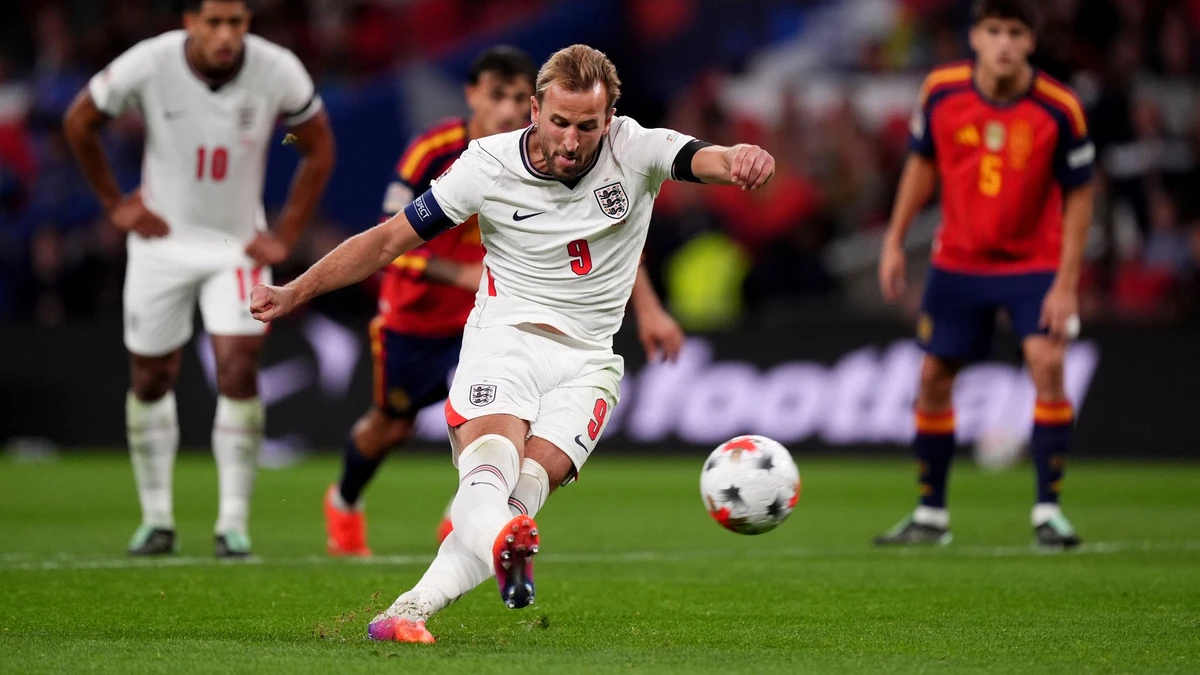
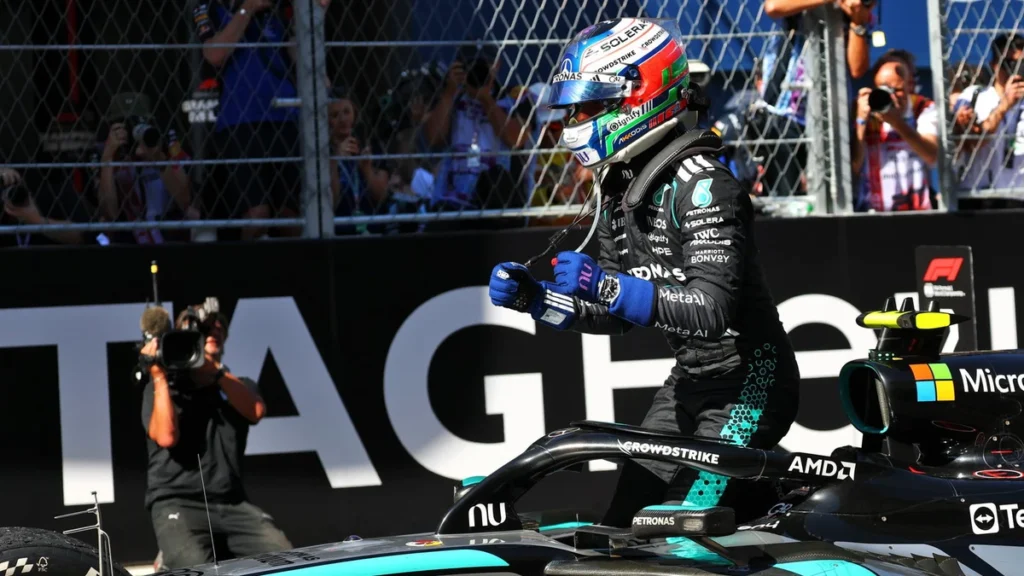
Kimi Antonelli won the first Formula 1 race held at Madrid’s new Madring circuit on Sunday 13 September, and the result will matter far longer for the championship than for the circuit. The Mercedes driver crossed the line 4.351 seconds ahead of Max Verstappen, with pole-sitter Lando Norris third, for his eighth grand prix win of the season.
The standings tell the rest. Kimi Antonelli has 292 points to team-mate George Russell’s 211, a lead of 81 with nine rounds still to run, according to Crash.net’s championship table after the race. Lewis Hamilton, who retired early with a brake failure, is now 101 points adrift in third place.
How One Virtual Safety Car Settled the Race
For the first third of the 57-lap race, Norris was in control. He had started from pole on medium tyres, covered Antonelli into the first corner and led at the end of the second lap. Antonelli ran off the track twice on the opening lap and had to give back a position he had gained by cutting a corner, PlanetF1’s race report records. The track temperature was 53 degrees Celsius at the start, and the grid was split across all three tyre compounds, with most of the field starting on the hard tyre.
The opening laps were not tidy anywhere. Verstappen was told by Red Bull to hand a place back to Hamilton after leaving the track and gaining an advantage, and stewards took no further action. Oscar Piastri lost part of his McLaren’s front wing after two moments with Russell and dropped to tenth. Hamilton’s own race was already unravelling: he reported that he had no brakes and brought the Ferrari back to the pits to retire.
The race turned on lap 15. Lance Stroll’s Aston Martin was stranded at Turn 20, and race control deployed a virtual safety car. Norris had just passed the pit entry when the neutralisation was shown. Antonelli, Verstappen and Russell were behind him, and all three came in for fresh tyres at the reduced time cost a virtual safety car offers. According to Crash.net, Antonelli had been more than seven seconds behind Norris when it began.
Norris’s afternoon then got worse. The virtual safety car ended moments before he made his own stop a lap later, and a slow front-right tyre change cost him further time and dropped him behind Russell. Charles Leclerc, who had started on hard tyres and stayed out, led for a long spell before finally pitting with seven laps remaining. That handed the lead to Antonelli, who absorbed pressure from Verstappen for several laps before easing clear, while Norris closed on the Red Bull but could not find a way past.
Leclerc finished fourth for Ferrari and Russell fifth, after Mercedes put him on a two-stop strategy from seventh on the grid. Liam Lawson, Franco Colapinto, Piastri, Arvid Lindblad and Nico Hulkenberg completed the points, according to The Race’s provisional classification. It was a difficult day for the two home drivers. Carlos Sainz and Fernando Alonso collided on lap 13, Sainz was given a five-second penalty and later retired, and Alonso finished 17th, two laps down, after pitting for a new nose.
What an 81-Point Lead Means With Nine Rounds Left
A grand prix win is worth 25 points, so a gap of 81 is larger than three victories. Russell would need to outscore his team-mate by an average of nine points a weekend over the remaining nine grands prix simply to draw level, and he would have to do it in identical machinery against a driver who is currently winning.
Behind the two Mercedes drivers, the order is close but distant from the lead. Hamilton has 191 points, Norris 186, Leclerc 167, Verstappen 145 and Piastri 120. Only five drivers have won a grand prix this season: Antonelli with eight, Russell and Norris with two each, and Hamilton and Leclerc with one apiece. Verstappen has not won yet, despite six grand prix podiums, the latest of them in Madrid.
The constructors’ championship looks even further out of reach for the chasing teams. Mercedes has 503 points, 145 clear of Ferrari on 358, with McLaren on 306 and Red Bull on 230, according to Sportskeeda’s post-race tables.
The remaining calendar begins with the Azerbaijan Grand Prix in Baku on 24-26 September and continues with two October rounds that end in Singapore on 9-11 October. It then moves through the United States, Mexico City, Sao Paulo, Las Vegas and Qatar before the finale in Abu Dhabi on 4-6 December, according to the official 2026 schedule.
Eight Wins, Built in Two Separate Runs
The season did not begin as a procession. Russell won the opening round in Australia, with Antonelli second. Kimi Antonelli then won five grands prix in a row, in China, Japan, Miami, Canada and Monaco, and by early June he had built a lead that already looked difficult to close.
The middle of the year was different. Hamilton won the Barcelona-Catalunya round for Ferrari, Russell won in Austria and Leclerc won the British Grand Prix. Antonelli answered in Belgium, but Norris then won in Hungary and the Netherlands, with Antonelli third and second respectively. For a stretch of the summer, the open question was whether the early run would be enough to carry him to the title.
The last two races have gone a long way towards answering it. Antonelli won the Italian Grand Prix on 6 September and followed it with Madrid a week later. On the official results he has now finished on the podium in 12 of the 14 rounds held this year, missing out only in Barcelona and at the British Grand Prix. That consistency, more than the win total, is what has turned a strong season into a commanding one.
Mercedes Concedes the Timing Favoured It
Mercedes did not pretend the victory was entirely of its own making. Team principal Toto Wolff told Sky Sports, in comments reported by Crash.net, that the team felt it had mostly been unlucky with virtual safety cars and safety cars this year, and that on this occasion fortune had fallen its way. He offered his sympathy to McLaren, whose leading driver had been just past the pit entry when the call came.
Wolff also described how quickly the decision was taken. Someone in the strategy group judged that the stranded Aston Martin would not be cleared quickly, the call was double-checked and relayed to Antonelli, and the whole exchange took about three seconds, he said.
His assessment of the driver was more nuanced than simple praise. Wolff said Antonelli had stayed calm as the pressure of the title fight grew, sometimes almost too calm for his liking, and pointed to a radio message near the end of the race in which the Italian asked the team to check the car because he thought he had brushed a wall. Wolff suggested that the detachment might simply be how Antonelli keeps his focus.
Why Drivers Panned the New Circuit
The Madring was built to give Madrid a central, modern Formula 1 venue. The official circuit guide describes a 5.414-kilometre layout of 22 corners that mixes public roads with private land. Its showpiece is Turn 12, La Monumental, a half-kilometre curve with 24 per cent banking where around 45,000 spectators can watch the cars pass. The city last hosted the sport around 40 years ago at Jarama, 30 kilometres to the north.
The racing did not match the setting. Audi’s Gabriel Bortoleto said he had almost fallen asleep, according to Crash.net’s round-up of driver reviews. He said the race had been defined by the virtual safety car, that he and Pierre Gasly had been left hoping for a red flag so they could change tyres, and that the layout offered nowhere to overtake. He also suggested that drivers should be consulted when new tracks are designed.
Gary Anderson argued in a column for The Race that the problem is wider than one circuit. He pointed to cars that lose too much front-wing downforce when following another car, to energy harvesting and deployment strategies that decide passes more than driver skill does, and to cautious tyre pressures and compound choices. Pirelli brought the middle of its range to Madrid, and Anderson noted that Gasly completed 55 laps on a single set of hard tyres. Even the banked Turn 12 disappointed him, because most drivers lifted there to harvest energy for the following straight. His suggested changes included removing the Turn 5 chicane and merging Turns 16 to 19 into one long curve.
What to Watch Before Baku
Three questions carry into the Azerbaijan Grand Prix. The first is whether Russell can turn the title fight back into a genuine contest. With Mercedes 145 points clear in the constructors’ standings, the team’s two drivers are effectively racing each other for the title, and every point Antonelli adds narrows Russell’s window further.
The second is McLaren’s response. Norris, the reigning world champion, took pole position in Madrid and led comfortably until the virtual safety car, a reminder that McLaren had the quickest car over a single qualifying lap in Madrid. He is only five points behind Hamilton in the fight for third place.
The third is Ferrari’s reliability. Hamilton’s brake failure was his first retirement of the season, and Crash.net reported that he was conceding defeat in the title race after the weekend. Leclerc’s long first stint kept him in the lead for much of the afternoon, but after his only stop he rejoined fourth, 24 seconds behind the fight for the podium.
MW3.News last looked at a season-defining result in July, when Sinner and Noskova took the Wimbledon titles. Formula 1’s equivalent moment is still some way off, but the numbers are moving in one direction. Kimi Antonelli arrives in Baku with 81 points in hand, and Russell arrives needing the kind of weekend that Madrid denied him.