Corporate America has started talking about prices again. The words “inflation” and “inflationary” came up 820 times on S&P 500 earnings calls in October, the highest monthly count since February 2024, according to a Bloomberg analysis of call transcripts. Industrial companies supplied about a quarter of those references, and the list of firms raising the subject now runs from paint makers and spice blenders to carmakers and banks.
The timing matters. The count landed in the same weeks that the US Bureau of Labor Statistics reported a hotter-than-expected October price print and Federal Reserve officials lined up behind another rate increase. Below is what the numbers show, company by company, and where the limits of a word count sit.
Where the 820 Mentions Came From
Bloomberg’s count, reported by Chloé Meley, attributes the jump to cost pressure that has spread well beyond the oil patch. Soaring oil prices have produced blowout results for the energy majors, but they have also raised the price of fuel, fertiliser, plastic resin and other raw materials. That makes it more expensive to fly planes and to package goods, and it shows up in the cost lines of companies that never touch a barrel of crude.
Industrials carried about a quarter of all references, as energy and logistics costs weighed on the sector. HVAC maker Lennox International recorded the highest number of mentions of any company. Its chief executive, Alok Maskara, told analysts the company expects “inflationary pressures to continue, particularly from tariffs, components, and commodities.”
The materials sector told a similar story. Paint maker PPG Industries set out plans to offset rising costs with price increases, but chief executive Timothy M. Knavish was careful not to promise too much. “I would certainly not assume price inflation to be a tailwind in the short term because we’ve still got some work to do,” he said, according to Bloomberg. Chief financial officer Jamie A. Beggs added that raw material costs were still rising.
Consumer companies are in the same position. McCormick, the spice maker, is dealing with elevated freight costs and subdued spending. “As we go into ’27, we still have a lot that we have to sort out right now in terms of inflation and costs, and where the consumer is going to be,” chief executive Brendan M. Foley said on the company’s call. Even banks, which tend to be better insulated from input costs, raised the subject. Wells Fargo chief executive Charles W. Scharf said on an analyst call: “Inflation and higher interest rates continue to be headwinds, and the longer they persist, the more pressure they can place on both consumers and commercial clients.”
General Motors Put a Dollar Figure on It
General Motors offered one of the clearest measurements of the season. On its third-quarter call on 20 October, the carmaker reported revenue of $50 billion, up 3% from a year earlier, and adjusted earnings before interest and tax of $4.1 billion, up 22%, according to a MarketBeat summary of the call. Its North American margin of 8.7% benefited from a richer mix of full-size pickups, smaller electric-vehicle losses and lower warranty costs. Those gains were partly offset by commodity inflation, logistics costs, higher DRAM memory-chip prices and the cost of moving production to the United States.
Chief financial officer Paul Jacobson said copper prices had reached record levels and hot-rolled coil steel was at a four-year high, with spot prices for both metals up 10% to 15% since July and about 50% above last year’s average. GM said the recent inflation adds roughly $400 million of incremental cost in 2026, most of it landing in the fourth quarter, and that commodity inflation, logistics and DRAM costs now add up to a full-year headwind of about $2 billion.
The more important number is the forward one. If the recent commodity inflation were annualised, Jacobson said, it could add a further $1 billion to $1.5 billion of adjusted EBIT headwind in 2027. Management said its 2027 outlook depends in part on commodity, logistics and memory costs moderating. GM still narrowed its 2026 adjusted EBIT guidance to between $14.5 billion and $15.5 billion and authorised a new $20 billion share buyback, so the pressure is squeezing a profitable company rather than threatening a fragile one. That distinction matters when reading the mention count: a company can talk about inflation a great deal precisely because it is large enough to measure it carefully.
Lennox Shows How Pricing Power Can Slip
Lennox, the company that mentioned inflation most often, also shows what happens when costs rise faster than a business can pass them on. In its third-quarter results, filed with the Securities and Exchange Commission on 28 October, revenue rose 10% to $1.6 billion, but total segment profit fell 2% to $323 million and the segment margin dropped 240 basis points to 20.6%. Adjusted earnings per share fell 7% to $6.84.
The release itemises the damage: a $45 million headwind from product cost inflation, including tariffs, and lower factory absorption, plus $15 million of higher fuel costs and further inflation across selling, administrative and distribution expenses. Maskara said the company’s “margins and results fell short of our expectations, reflecting heightened competitive pressure and the impact of persistent inflation on our costs.” He added: “We are retooling our processes to more effectively pass through cost increases while accelerating productivity.”
The residential business took the bigger hit. Home Comfort Solutions revenue rose 3%, but its segment margin fell 490 basis points after Lennox made targeted price adjustments to defend and recapture market share. Put plainly, the company chose to absorb part of its cost increase to protect volume. Its commercial arm, Building Climate Solutions, grew revenue 24% and held a 26.2% margin. The split is a useful reminder that one company’s inflation commentary can describe very different conditions in different end markets, and that a single headline count flattens all of that into one number.
Counting Words Is Not the Same as Counting Companies
A word count is a blunt instrument, so it is worth being precise about what this one measures. Bloomberg’s figure counts every use of the two words across transcripts in a calendar month. Its own chart of the series shows it rising in the main reporting months and falling back in between, because most companies hold their calls in the weeks after a quarter closes. A big October number is therefore partly a function of the calendar. What makes this one notable is that it beat every month since February 2024, including the earnings-heavy months in between.
FactSet measures something different: the number of S&P 500 companies that cite “inflation” at all during a reporting season. By that yardstick the trend was flatter through the summer. FactSet’s John Butters counted 205 companies citing inflation on calls held between 15 June and 10 September, a 6% decline from 217 in the first-quarter season. That was well below the five-year average of 276 but slightly above the 10-year average of 199, and far from the 10-year peak of 410 in the second quarter of 2022, when consumer price inflation hit 9.1%. Industrials supplied the most citations of any sector, while materials and consumer staples had the highest share of companies mentioning the word, at 84% and 80% respectively.
If FactSet follows the same three-month window it used for the second quarter, its company count for the current season will not be complete until December. Read together, the two measures suggest that the October jump is about intensity as much as breadth so far. Companies that were already talking about inflation on S&P 500 earnings calls are talking about it more often and in more detail, and increasingly with dollar figures attached.
The Macro Numbers Behind the Calls
The executives are not talking in a vacuum. On 10 November the Bureau of Labor Statistics reported that the consumer price index rose 0.4% in October, above the 0.3% economists surveyed by Dow Jones had expected, after a 0.6% rise in September, CNBC reported. Core prices, which strip out food and energy, rose 0.3% against a forecast of 0.2%. The BLS did not publish an annual rate this time, because last year’s government shutdown stopped it collecting enough data in October 2025, which leaves no clean comparison point.
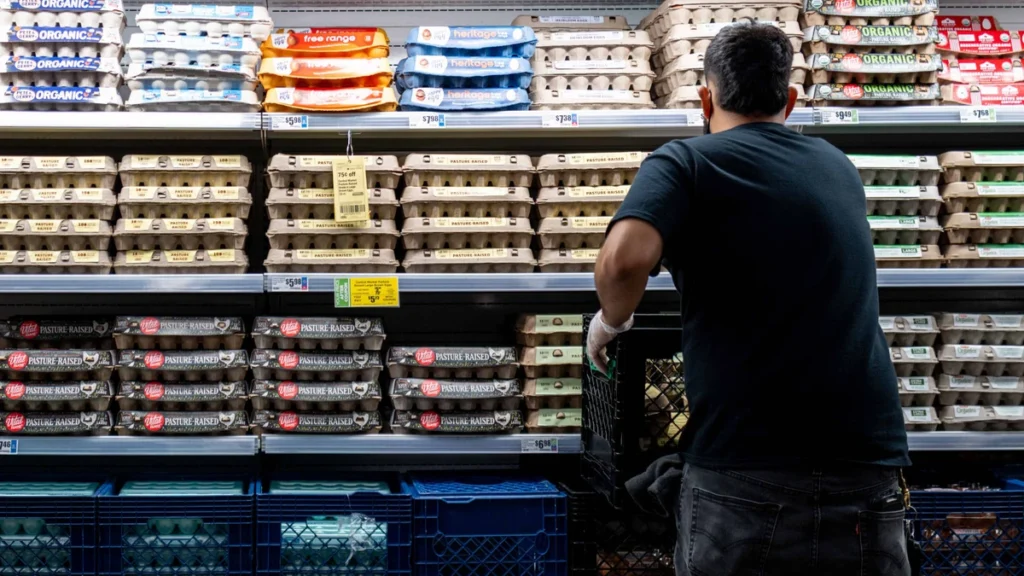
The detail lines up with what companies are describing. The energy index rose 0.7% and gasoline 1%. Food rose 0.5%, with beef up 0.9%. Transportation services climbed 0.8%, and electricity rose 0.9%, an increase CNBC linked to demand from the artificial intelligence build-out. Shelter rose 0.3% and accounted for more than 30% of the headline increase.
Fed officials have taken note. The central bank held its benchmark range at 3.75% to 4% in October, but traders are now fully pricing a quarter-point increase at the 8-9 December meeting. Philadelphia Fed president Anna Paulson listed tariffs, energy prices and the AI build-out as the factors keeping inflation elevated and said the latest data suggest “inflation pressures are still very much with us.” Dallas Fed president Lorie Logan said she sees a need for two more quarter-point increases.
Smaller firms are signalling the same thing. A net 37% of businesses responding to the National Federation of Independent Business survey in October said they plan to raise prices in the next three months, the highest share since July 2022. That matters for the large companies too, because their suppliers, distributors and contractors are often exactly those smaller firms.
What to Watch as Reporting Season Closes
Three markers will show whether October was a spike or a turn. The first is the November count. Bloomberg reported that a week into the month, mentions of inflation were already far ahead of the total for the whole of November last year, with the cost of living a central theme of the US midterm elections. The second is the personal consumption expenditures price index, the Fed’s preferred gauge, due later in November; Logan said she is worried it could also move higher. The third is FactSet’s company count for the season, which will show whether more firms are raising the issue or the same firms are raising it louder.
The practical question for the companies themselves is pricing power. GM is guiding through the pressure with a narrowed but still large profit range. Lennox chose to give up margin to defend share in its residential business. PPG is pushing prices but will not call inflation a tailwind. Those are three different responses to the same input costs, and the next round of S&P 500 earnings calls will show which of them holds up. For another recent case of a single cost line reshaping a set of quarterly results, see our report on how unpaid farm loans cut Banco do Brasil’s profit by two-thirds.