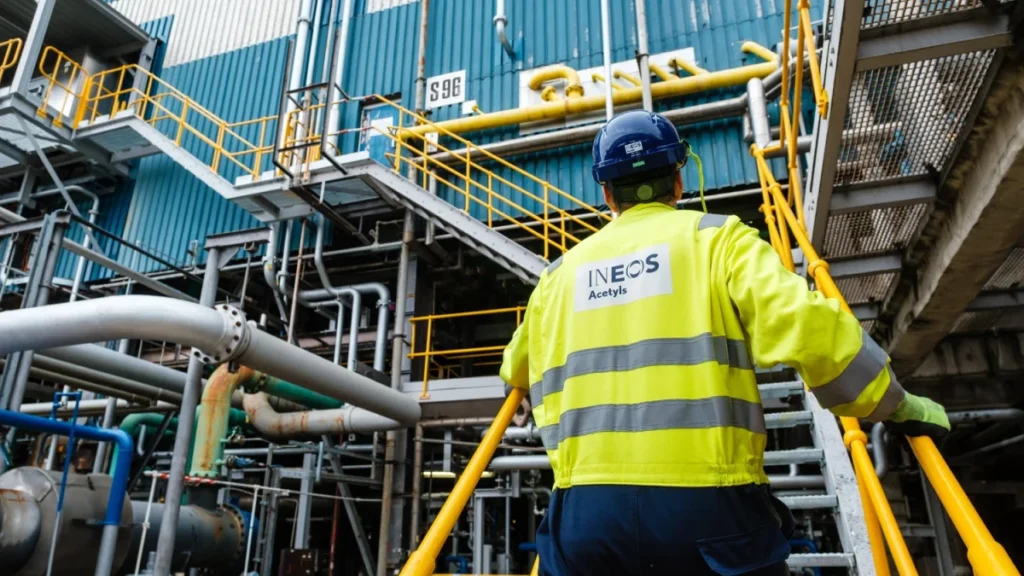
The Ineos Hull operation is being mothballed. All three of the group’s acetyls plants at Saltend Chemicals Park are coming offline, and the company says the reason comes down to one number: gas that costs it 12 times what an American competitor pays. Two of the units have already stopped. The third is due to follow within days, and all three will stay idle “until further notice”, according to the announcement Ineos published on 22 September.
The Ineos Hull decision reaches well beyond East Yorkshire. By the company’s own description these are Europe’s last remaining world-scale acetyls units, making building-block chemicals that end up in medicines, food, paint, clothing and military explosives. Ineos says every other acetyls unit in Europe has already closed because of energy costs, so when Saltend stops, there is no neighbouring European plant waiting to pick up the slack.
What the Three Saltend Units Actually Make
Each plant makes a different chemical, and each one ends up somewhere familiar. According to the BBC’s report on the pause, one unit produces acetic acid, which goes into vinegar, paint and glue. A second makes acetic anhydride, a key ingredient of aspirin. The third makes ethyl acetate, which is used as a solvent and to decaffeinate tea and coffee.
Ineos lists the downstream markets more broadly: pharmaceuticals, food products, clothing, cosmetics, detergents, construction materials and high-energy military explosives. Its products are sold to customers throughout Europe. The Hull Story, the city’s independent news site, notes that the plants sit on the 370-acre Saltend Chemicals Park in East Yorkshire, and that the site’s owner had invested heavily there only recently.
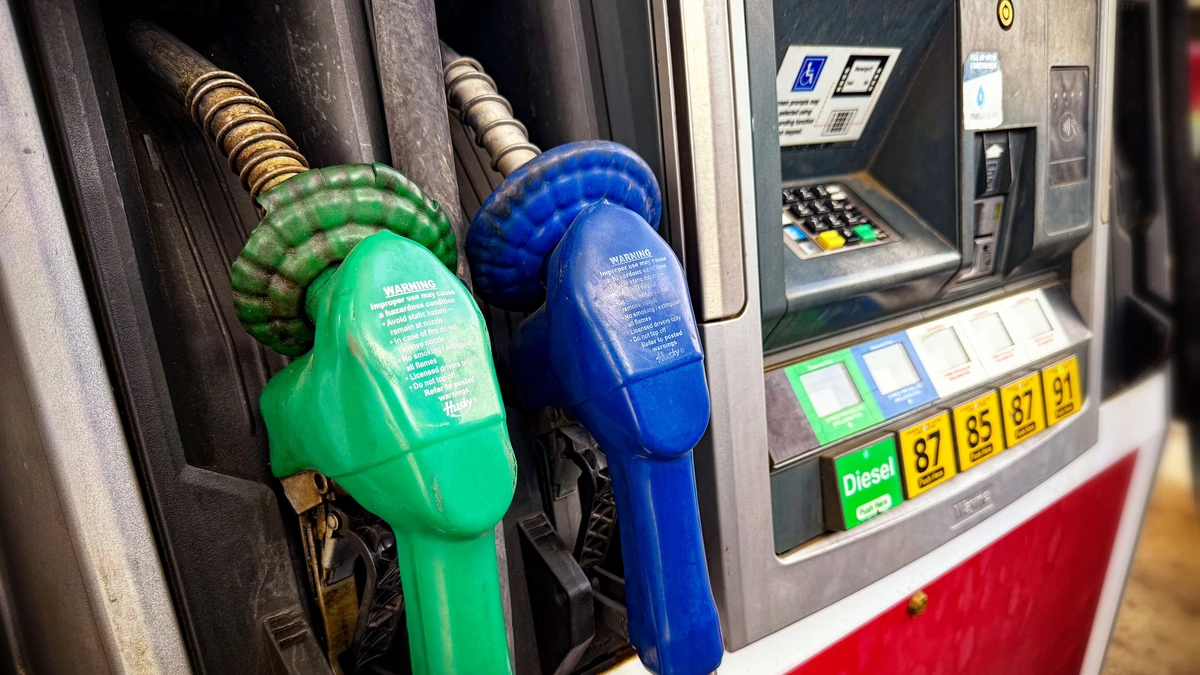
Gas matters twice over at a site like this. It is burned to produce energy, and it is also a feedstock, a raw material that ends up chemically inside the finished product. That double exposure is the reason a gas price spike hits an acetyls plant harder than it hits a factory that simply needs power and heat. A manufacturer that only buys energy can look for efficiency savings. A manufacturer whose product is partly made of gas has far fewer options when the price of that gas rises sharply.
The Jobs Figure Depends on Where You Draw the Line
Three different employment numbers are circulating, and they measure different things. The BBC reports that Ineos said the move will affect up to 1,000 of its staff, of whom 245 work directly at the site. Ineos’s own statement says the three plants support “almost 4000 highly skilled jobs”, a figure that counts the wider supply chain and the apprenticeship schemes attached to the site. The Hull Story put direct employment at around 300. The honest summary is a few hundred people on site and a much larger ring of jobs that depend on the plants running.
For now, the people on site are not being laid off. The BBC understands that workers across the sites will be kept on while Ineos tries to buy liquefied natural gas directly from the United States at lower prices, a process that could take up to a year, or waits for gas prices to fall. That makes this a pause with a price trigger rather than a closure with a date. Business Matters reports that Ineos did not set out any timescale for a move to permanent closure.
It is not the first cut at Saltend. Ineos removed 60 jobs at the Hull site last year, a reduction the BBC describes as a fifth of the Ineos Acetyls workforce, and at the time the company blamed high energy costs and what it called “dirt-cheap” competition from China. A year on, the same two pressures have produced a far larger decision.
Twelve Times or Eight Times: What the Gas Market Shows
The headline claim in the Ineos statement is that gas in Europe now costs 12 times as much as it does in the United States, and that European gas is eight times more expensive than coal-based production in China. Sir Jim Ratcliffe, the group’s chairman, repeated both numbers in his comments on the decision.
Market data points to a very wide gap, though a narrower one than the company’s figure. Reuters, citing LSEG and Intercontinental Exchange data on the day of the announcement, reported British front-month gas trading at around $23.51 per million British thermal units, against $2.84 at the US Henry Hub benchmark. On those two contracts the multiple is a little over eight, not twelve. Ineos did not say which prices its own comparison uses, so the two figures are not a like-for-like test of each other. What both agree on is the direction and the scale: a British producer is paying a large multiple of what its American competitor pays for the same fuel and the same feedstock.
The recent move has been steep. According to the BBC, the wholesale price of natural gas has almost doubled in the UK and Europe since July, after disruption to oil and gas supplies through the Strait of Hormuz following the US-Israel war in Iran. That timing is part of the story. The decision was not taken after a slow drift upward in costs, but after two months in which the price of the plants’ main input nearly doubled.
Ratcliffe’s Case, and the Government’s Reply
Ratcliffe framed the pause as a policy failure rather than a commercial one. “I’m sure people will find it hard to believe that we are being forced to mothball some of the most efficient plants in Europe but with gas prices now 12 times the level in the US and 8 times that of China, we just cannot compete,” he said in the company’s statement. In remarks reported by Business Matters he went further, saying the UK government’s energy policy was leading to “economic vandalism on an industrial scale”, with jobs exported to China and the United States.
His environmental argument runs alongside the economic one. Ineos says material made in Hull carries half the carbon footprint of equivalent US production and an eighth of the Chinese equivalent, so replacing it with imports would raise global emissions rather than cut them. The company is asking the governments of the UK and the EU, where most of its output is sold, to put tariff protections in place against Chinese products. According to Business Matters, a spokesman said Ineos also wants anti-dumping measures to stop cheap US and Chinese products being sold into the market below cost.
The Department for Business, Innovation, Science and Trade said it would be “a concerning time for workers in Saltend and their families”. A spokesperson pointed to “£350 million for strategically important chemicals producers, which will be available on a co-investment basis”, to trade measures already in place on foreign chemicals imports, and to the Supercharger and British Industrial Competitiveness Scheme, which are aimed at high electricity costs. The GMB union was blunter. “GMB has repeatedly warned UK industry will suffer from the country’s deeply uncompetitive gas prices,” Charlotte Brumpton-Childs, the union’s national secretary, said in comments reported by The Manufacturer.
A Group That Was Already Cutting Back
The Hull decision lands on a business that has been under strain for some time. Business Matters reports that Ineos closed its synthetic ethanol plant at Grangemouth in January 2025 with the loss of 80 direct jobs, introduced a hiring freeze in October 2025 and, in March this year, reported a $593m loss, suspended its dividend for a second year and disclosed net debt of €11.7bn. A group carrying that much debt has little room to keep running plants it says cannot compete while it waits for gas prices to ease.
There is an awkward irony in the timing. The Hull Story notes that Ineos completed a £30m project at Saltend in 2025 that switched part of the operation from natural gas to hydrogen, cutting carbon emissions by 75 per cent. The site was, in other words, recently upgraded for exactly the kind of lower-carbon production that climate policy is meant to encourage. It is now idle because of the cost of the fuel and feedstock it still depends on, and the company argues that its customers will simply buy the same chemicals from higher-emission plants abroad.
What It Says About British Industry This Autumn
The pause arrived a day before S&P Global’s flash purchasing managers’ survey showed British business activity cooling. The composite index fell to 51.7 in September from 52.5 in August, while the manufacturing index edged up to 52.0, according to the S&P Global release as reported by investingLive. Chris Williamson, chief business economist at S&P Global Market Intelligence, said growth, confidence and employment “are all being hamstrung by high energy prices, elevated business costs, geopolitical worries, higher market borrowing costs and uncertainty over government policy at home in the run up to the autumn Budget.”
Energy costs have been working their way through the economy on several fronts at once. Our recent report on how a diesel price record just landed on your grocery bill traced the same pressure into food prices, where it arrives slowly through haulage and farming. For a chemicals plant the effect is far more abrupt: the site either covers its gas bill or it stops, and at Saltend it has stopped.
Three things will decide whether the Ineos Hull pause becomes something more permanent. The first is the gas price itself, which has almost doubled since July. The second is whether Ineos can secure American liquefied natural gas on better terms, a process the BBC says could take up to a year. The third is policy: whether governments in London and Brussels act on the tariff and anti-dumping measures Ineos is asking for, and whether support such as the £350m chemicals fund reaches sites like Saltend in time to matter. Until one of those moves, Europe’s last world-scale acetyls plants will sit quiet on Humberside.