For three years the hottest question in artificial intelligence hardware has been whether anyone can meaningfully challenge Nvidia. On 30 June 2026, a startup founded by two Harvard dropouts made its case in public. Etched emerged from stealth with a working chip, $800 million raised, a $5 billion valuation and, most tellingly, more than $1 billion in signed customer contracts before it has shipped at scale.
The AI chip startup Etched is not trying to beat Nvidia at everything. Its entire pitch rests on doing the opposite – and that single, contrarian bet is what makes it one of the most closely watched hardware companies of the year.
One Bet: Inference, Not Everything
Modern AI has two big compute jobs. Training teaches a model on huge datasets, and inference is what happens every time you actually use one – the model running to answer a question, write code or generate an image. Training grabs the headlines, but inference is where the ongoing cost lives, because a popular model runs billions of times a day. That bill has become one of the biggest constraints on the whole industry.
Nvidia’s graphics processors are extraordinarily flexible and dominate both jobs. Etched’s wager is that flexibility is exactly what makes them expensive for inference. By designing a chip that does only inference, and does it in hardware rather than software, the company argues it can deliver far more answers per watt and per dollar. It is a classic specialisation trade: give up the ability to do everything in exchange for doing one thing dramatically better.
The economics are stark. Training a frontier model is a one-off, if enormous, expense, but inference is a bill that never stops. As chatbots, coding assistants and image tools scale to hundreds of millions of users, the cost of serving each query has become the number that decides whether an AI product is profitable at all. Shaving even a fraction off inference cost, at that volume, is worth billions – which is exactly why so much capital is suddenly flowing toward the problem, and why a chip that does nothing but inference can be a viable business.
The Sohu Chip and ‘Frontier Inference Clusters’
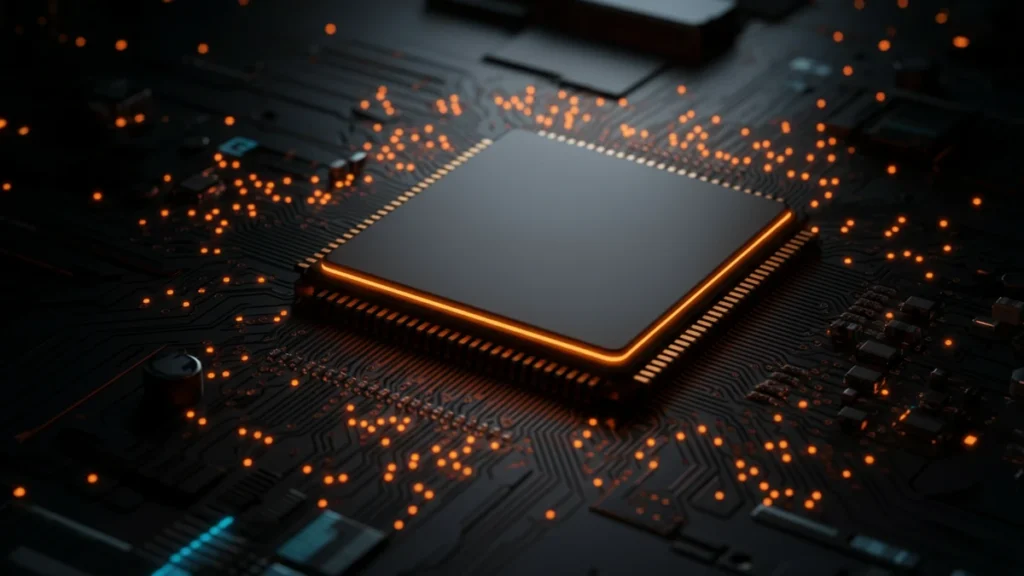
The product is a chip called Sohu, which Etched bundles with custom server racks and its own software into what it markets as frontier inference clusters, according to SiliconANGLE’s launch coverage. Rather than selling a bare chip, the company sells the whole rack, tuned end to end for running large models. It says the result is cheaper, faster and more power-efficient inference than a comparable cluster of general-purpose GPUs, and it plans to start shipping to some customers over the summer.
The more than $1 billion in pre-committed contracts matters as much as the technology. Hardware startups routinely show impressive benchmarks and then struggle to convert them into orders. Signing that much revenue before volume shipping suggests a set of large AI operators are hungry enough for cheaper inference to bet on an unproven supplier.
Selling the whole rack rather than a bare component is a deliberate choice. It lets Etched tune performance end to end and spares customers the painful integration work that often sinks new hardware, while locking in larger, stickier contracts. The trade-off is that the company has to be a systems business, not just a chip designer – harder to execute, but also much harder for a rival to copy.
A Founder Story and a Near-Death Turn
Etched was founded in 2022 by Gavin Uberti and Robert Wachen, who dropped out of Harvard and won Thiel Fellowships to pursue the idea. In the years since, the company has assembled a team of more than 400 people, drawn heavily from Nvidia, Broadcom, Google’s TPU group, memory maker SK Hynix and high-frequency trading firms – a roster that pairs chip-design pedigree with the kind of latency-obsessed engineering culture that inference rewards.
The path was not smooth. Building a bespoke chip is capital-intensive and unforgiving, and betting the entire company on a single architecture left little room for error; industry accounts describe more than one near-death moment before the design came together. Emerging from stealth with a working chip and real contracts is, in that light, less a debut than a survival story.
That pedigree matters because inference hardware is unforgiving: a design flaw discovered after fabrication can cost a year and a fortune to fix. Hiring engineers who have shipped chips at scale, rather than only prototyped them, is part of why investors were willing to attach a $5 billion valuation to a company that had, until June, revealed almost nothing in public.
Who Is Backing It
The investor list reads like a map of who believes inference is the next battleground. As the company’s launch announcement details, backers include a venture fund strategically tied to the world’s largest contract chipmaker, TSMC – a crucial relationship for anyone who needs cutting-edge fabrication – alongside Peter Thiel and a cluster of elite quantitative trading firms such as Jane Street, Hudson River Trading, Jump Trading and Two Sigma. Those firms live and die by microseconds, so their interest in fast, cheap inference is more than financial. The round also drew AI researchers including Andrej Karpathy, Geoffrey Hinton and Fei-Fei Li, names that lend the effort unusual technical credibility.
Etched Is Not the Only Challenger
Etched is entering a field that has quietly filled up. A cluster of rivals, from specialists building ultra-fast inference chips to the cloud giants designing their own silicon, are all chasing the same prize of cheaper AI serving. Amazon, Google and Microsoft have each poured money into in-house accelerators to cut their reliance on Nvidia, and other well-funded startups have promised order-of-magnitude gains on inference speed. What sets Etched apart is how far it has committed to a single architecture and the size of the customer contracts it has already booked. In a crowded race, revenue before shipping is the clearest signal that buyers take the pitch seriously.
Can Anyone Really Challenge Nvidia?
Scepticism is warranted. Nvidia’s advantage is not only its silicon but its software ecosystem, which developers have spent years building around, and challengers have promised to unseat it before without denting its lead. The moat Nvidia has built is not just fast chips but a decade-old software platform, CUDA, that most AI code is already written against; rivals must either match that ecosystem or, like Etched, sell a complete system that hides the difference from the customer. Etched’s answer is that it is not fighting on Nvidia’s terms at all; it is carving out the one slice of the market where a fixed-function design can win decisively. The models that now run on this hardware, from the new families we covered in our look at OpenAI’s GPT-5.6 lineup, are exactly the workloads Sohu is tuned for.
The risk sits in that same specialisation. A chip hard-wired for the way today’s models work is spectacularly efficient right up until the models change shape, at which point a flexible GPU can adapt while a fixed design cannot. Etched is betting that the dominant transformer architecture is stable enough, and inference demand large enough, to justify committing to it. If it is right, the company will have proved that the way to beat Nvidia is not to copy it but to specialise around it. If it is wrong, it will be a cautionary tale about betting everything on a single chip. Either way, the era of Nvidia facing no serious, well-funded competition in inference is over.