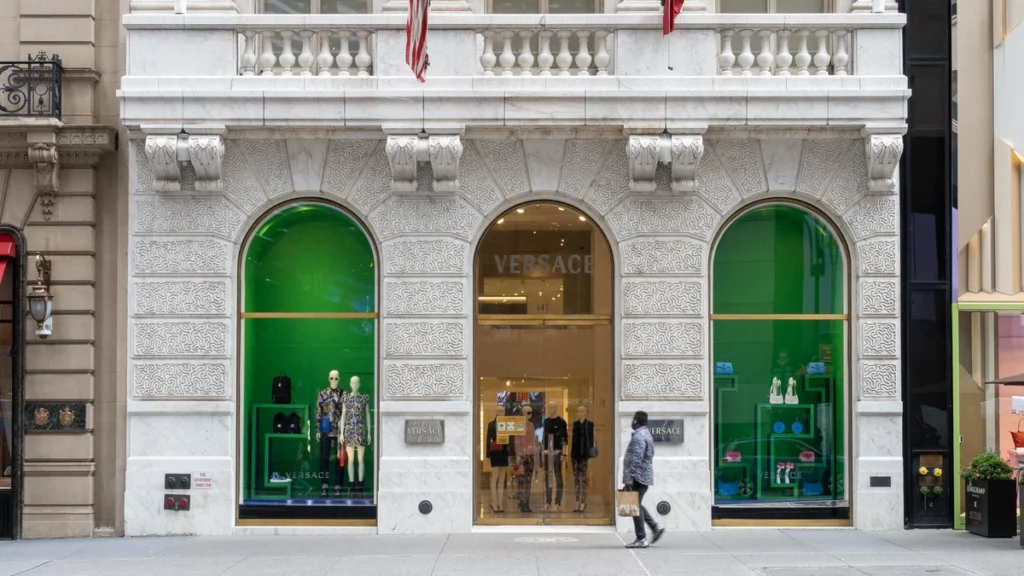
A Versace store frontage.
A Versace store frontage.
Dario Vitale was appointed Versace creative director in March 2025. He presented one collection, in September of that year, and was gone by early December. His departure came within days of Prada Group completing its takeover of the house, and it ended a tenure of roughly eight months.
His replacement, the Belgian designer Pieter Mulier, formally started on 1 July. That makes three people holding creative control of one of Italy’s most recognisable brands inside about eighteen months, and it is not an isolated case. Across the industry this summer, the people who decide what the rest of us will be wearing in two years’ time have been changing chairs at a speed that has no recent parallel.
Three Names in Eighteen Months
The sequence started with a genuine era ending. Donatella Versace stepped down as creative director in March 2025 after 27 years, moving into a brand ambassador role. Vitale, who came from Miu Miu where he had been design director, was appointed immediately.
Within a month of that appointment, Prada Group announced it was buying Versace, in a deal reported at around 1.04 billion pounds. The acquisition completed on 3 December 2025. Vitale left the following day. Whatever the internal reasoning, the optics are simple enough: a designer hired by one owner did not survive the arrival of another, and the collection he had already shown became a one-off.
Mulier was announced on 5 February this year, less than a week after confirming his own exit from Alaia, and he reports to Versace executive chairman Lorenzo Bertelli. Bertelli was unusually direct about the timeline. “While we were considering the acquisition of Versace, we identified Pieter Mulier as the right person for the role of the brand’s designer,” he said. In other words, the succession was decided before the deal closed.
Who Mulier Actually Is
He is not a surprise pick so much as a long-planned one. Mulier spent five years leading Alaia, taking the role in 2021 as the first creative director to follow the death of founder Azzedine Alaia in 2017, which is among the harder briefs in fashion. Before that he built his career alongside Raf Simons, working through Jil Sander, Dior and Calvin Klein.
That last detail matters more than it looks. Simons is now co-creative director at Prada, which means the group has placed two closely connected designers at the head of its two largest houses. For a company that has just spent a billion pounds acquiring a competitor, installing a designer whose working method is already understood internally is a lower-risk move than hiring a stranger with a louder name.
Prada framed the appointment as marking the beginning of a new chapter for the brand, and gave him the title of chief creative officer rather than creative director. The wording is not decorative. A chief creative officer typically holds authority across a brand’s whole visual output rather than the collections alone.
Six Senior Moves in a Single Month
Versace is the headline, but the churn is industry-wide. One trade round-up of July alone lists a run of senior appointments at established houses.
Olivier Rousteing moved to Rabanne as creative director after fourteen years at Balmain, with his first runway show set for March 2027. Jonathan Saunders takes over as executive creative director at Kate Spade New York from 26 August, arriving from &Other Stories. Simon Valer Dacsef joined Roksanda as head of design from Stella McCartney.
The commercial side moved just as fast. Romain Spitzer becomes chief executive of Bottega Veneta on 1 September, coming from LVMH and reporting to Kering chief executive Luca de Meo. Helene de Tissot arrives as Chanel’s chief financial officer in October from Pernod Ricard. Those are two of the most senior jobs in European luxury changing hands in the same season.
Why Everyone Is Moving at Once
Rapid turnover at the top is usually a symptom rather than a strategy. A creative director is the most visible lever a luxury house can pull when sales stall, and pulling it produces immediate coverage in a way that supply-chain reform or store refurbishment does not. When several groups reach for the same lever in the same period, it says something about how the sector reads its own position.
Consolidation is doing the rest of the work. Prada now owns Versace. Kering is reorganising under a chief executive who arrived from the car industry. Ownership changes almost always bring creative changes, because a new owner rarely wants to run a brand on a predecessor’s aesthetic bet. That is the same dynamic playing out in other consolidating sectors, from media groups to the merger fights now being contested in US courtrooms.
The cost is continuity. A designer generally needs three or four collections before an audience can tell what they are actually doing, and buyers need roughly the same to build confidence in the range. Vitale never got there. Whether Mulier does depends on how patient his owners turn out to be.
What This Means for the Clothes in the Shops
Leadership churn at this level takes roughly two years to reach a shop floor. A designer appointed now shapes a first collection that is shown months later, produced after that, and delivered to stores the following season. Anything on a rail today was signed off by someone who may already have left.
That lag explains why houses in transition often feel stylistically unresolved for a while. Archive pieces get reissued, accessories carry more of the commercial weight, and the ready-to-wear becomes cautious while the new direction is established. For shoppers this is not necessarily bad news. Transition periods tend to produce more discounting on outgoing ranges and more reissues of proven designs.
There is a broader consumer point too. When a small number of groups control an expanding share of the market, the number of genuinely distinct design voices narrows even as the number of labels stays the same. A Versace creative director appointed by the company that also owns Prada is not the same proposition as one appointed by an independent Versace, whatever the eventual clothes look like. That is worth keeping in view when the debut collection arrives and is described, as these things always are, as a total reinvention.
What to Watch Next
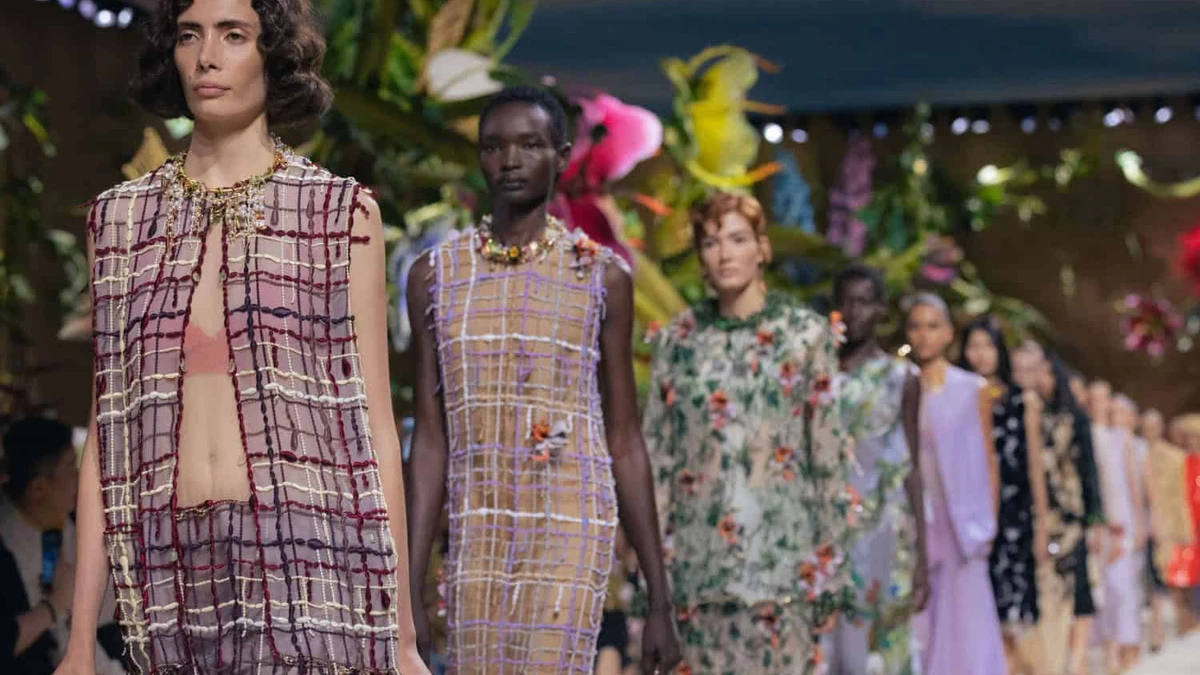
The first real test is Milan Fashion Week, where Mulier’s debut collection will be read as a verdict on the entire Prada strategy for the house. The questions are already obvious: how much of Donatella’s visual language survives, whether the archive gets mined or set aside, and how far a designer known for restraint will travel toward a brand built on the opposite instinct.
Rousteing’s Rabanne debut in March 2027 carries a similar weight, since he arrives after fourteen years defining a single house and has to prove the approach transfers. Both will be judged on commercial performance rather than reviews, and both are working on a shorter leash than their predecessors would have recognised.
For anyone outside the industry, the useful takeaway is narrower. The next Versace creative director may already have been identified, the same way this one was, long before anyone outside a boardroom hears about it. Fashion’s leadership decisions are made further in advance and executed faster than the announcements suggest, and this summer has made that unusually easy to see.