
Skip to content
  • Facebook
  • Instagram
MW3.News

MW3.News

Web News Portal

Connect with Us

  • Facebook
  • Instagram

Categories

Tags

afghan afghanistan afghans biden bolsonaro Boris Johnson brazil Business Celebrities china chinese coronavirus covid covid 19 covid19 covid passport Economy england Europe Fame football freedom green pass Health kabul lockdown Music mw3 news news no green pass no vaccine passports pfizer politics russia singer sports taliban travel trump UK us USA vaccine vaccine passport war
  • Home
  • About Us
  • Contact
  • Home
  • Featured
  • New York Orders the First Statewide Data Center Moratorium
  • Article
  • Featured
  • News
  • USA

New York Orders the First Statewide Data Center Moratorium

Will Lisil 14/07/2026
New York Orders the First Statewide Data Center Moratorium

The backlash against the artificial-intelligence building boom just got its first hard legal edge. New York has become the first US state to impose a statewide moratorium on new large data centers, hitting pause on an industry that has been expanding at breakneck speed to feed the computing appetite of AI.

Governor Kathy Hochul’s executive order, signed on 14 July, temporarily freezes state environmental permits for new hyperscale data centers – the giant facilities that house tens of thousands of servers – for up to a year. The stated goal of the data center moratorium is not to kill the industry but to buy time: to write rules that protect the power grid, ratepayers, the environment and communities before the next wave of construction locks in.

It is a landmark moment. For years, states competed to attract data centers with tax breaks and cheap power. New York has just done the opposite, and in doing so it has turned the growing unease about AI’s physical footprint into concrete policy.

Enjoying this article? Get more like it.

Get our latest articles delivered to your inbox.

What the Order Does

The mechanics are specific. The order bars the construction of new large-scale data centers that would draw 50 megawatts of power or more – a threshold that captures the biggest, most energy-intensive facilities – for a period of up to one year. During that window, the relevant state environmental permits are paused.

Crucially, the freeze is a means, not an end. The year is meant to be used to build a regulatory framework – rules on energy use, environmental impact, water consumption and cost to the public – so that future projects are approved on the state’s terms rather than the developers’. It is a moratorium designed to produce a rulebook, not a permanent wall.

Why New York Acted

The driving concern is cost and capacity. Hyperscale data centers consume staggering amounts of electricity, and when that new demand lands on a grid, it can push up prices for everyone connected to it. New York officials warned that unchecked data-center growth threatened to hike utility bills, strain the grid and deplete natural resources.

The numbers give the worry teeth. The average residential electricity price in New York has climbed nearly 68% since 2019, a punishing increase for households already squeezed by the wider cost of living. Layering the enormous, sudden load of AI data centers on top of that trend is precisely what the state says it wants to manage rather than absorb blindly. Water is a factor too: many large centers use significant volumes for cooling, another strain on local resources.

The scale is hard to overstate. A single hyperscale campus can draw as much power as a small city, and the 50-megawatt threshold in the order is roughly the appetite of tens of thousands of homes. When several such projects are proposed at once, utilities must either build new generation and transmission – costs that tend to be spread across all customers – or risk shortfalls at peak demand. That is the dynamic New York says it wants to get ahead of, rather than discovering the bill only after the concrete has been poured.

The AI Boom Behind the Demand

None of this is happening in a vacuum. The surge in data-center construction is a direct consequence of the AI boom – the same race to build ever-larger models, powered by ever-more chips, that has driven the explosive demand behind companies like those competing in the market for frontier AI models. Training and running these systems requires vast fleets of specialised processors, and those processors have to live somewhere, drawing power and generating heat around the clock.

That is why the footprint of AI has become a political issue, not just a technical one. The abstract promise of smarter software turns out to have a very physical cost – measured in megawatts, land, water and, ultimately, the bills of people who may never use the technology directly. New York’s order is an attempt to reckon with that cost before it becomes irreversible.

The Case on the Other Side

The moratorium is not without real trade-offs, and its critics make a serious case. Data centers bring investment, construction jobs, long-term operational employment and substantial tax revenue to the places that host them. A pause, industry groups warn, risks pushing all of that to other states that are only too happy to welcome it – meaning New York bears the cost of saying no while reaping none of the benefits.

There is also the simple reality that AI infrastructure has to be built somewhere. If the goal is for the United States to lead in artificial intelligence, the argument goes, then the computing capacity to support it must expand, and blocking it in one state does not reduce the overall need – it just relocates it. A durable policy will have to weigh those economic and strategic arguments against the concerns about cost and the grid, which is exactly what the coming year of rule-writing is meant to do.

A Broader Push on AI Governance

The moratorium did not arrive alone. Alongside it, the state announced a new office – referred to as the DIGIT Office – that will focus first on regulating large frontier AI developers, with an emphasis on greater transparency into their safety measures. That pairing is telling: New York is treating the physical infrastructure of AI and the governance of AI itself as two sides of the same problem.

It reflects a wider shift in how governments are approaching the technology. Early enthusiasm is giving way to a more sceptical, guardrails-first posture, in which the question is no longer only how fast AI can grow, but on what terms, at whose expense, and with what oversight. Tying data-center permits to a broader push for AI transparency signals that New York wants a seat at the table on both.

What It Signals Nationally

The most important thing about New York’s move may be that it is first, not that it is unique. Other states are weighing similar measures, and public opinion appears receptive: a June poll found that 46% of New Yorkers believed a one-year moratorium would be good for the state, against just 21% who thought it would be bad. When a policy this interventionist enjoys that kind of margin, other governors take note.

The politics of it are unusual, too, because the concern cuts across the usual divides. Rising electricity bills anger voters everywhere, and the strain that data centers put on local grids and water supplies has drawn objections from rural and suburban communities that would not normally align with a Democratic governor’s tech agenda. That is part of why a data-center pause is spreading as an idea: it lets officials be seen protecting households and the grid without having to oppose AI itself, which remains broadly popular.

Whether the pause becomes a model or a cautionary tale will depend on what New York does with its year. If it produces clear, workable rules that protect ratepayers without strangling investment, it could set a template the rest of the country follows. If it simply drives development elsewhere with little to show for it, critics will say so loudly. Either way, the era in which data centers could be built with little public scrutiny has, at least in one large state, come to an end – and the rest of the country is watching to see what replaces it.


About Post Author

Will Lisil

Director & Digital Creator at MW3.biz Ltd, United Kingdom.

See author's posts

Stay in the loop

Get our latest articles delivered to your inbox.

England's Visitor Levy Bill Puts No Cap on What Mayors Can Charge
Article Featured News Tourism UK

England’s Visitor Levy Bill Puts No Cap on What Mayors Can Charge

Will Lisil
15/11/2026
England is a step closer to its first tourist tax. The Visitor Levy (England) Bill, introduced in the House of…

Read More..

Inflation Came Up 820 Times on S&P 500 Earnings Calls in October
Article Business Economy Featured News USA

Inflation Came Up 820 Times on S&P 500 Earnings Calls in October

Will Lisil
14/11/2026
Corporate America has started talking about prices again. The words "inflation" and "inflationary" came up 820 times on S&P 500…

Read More..

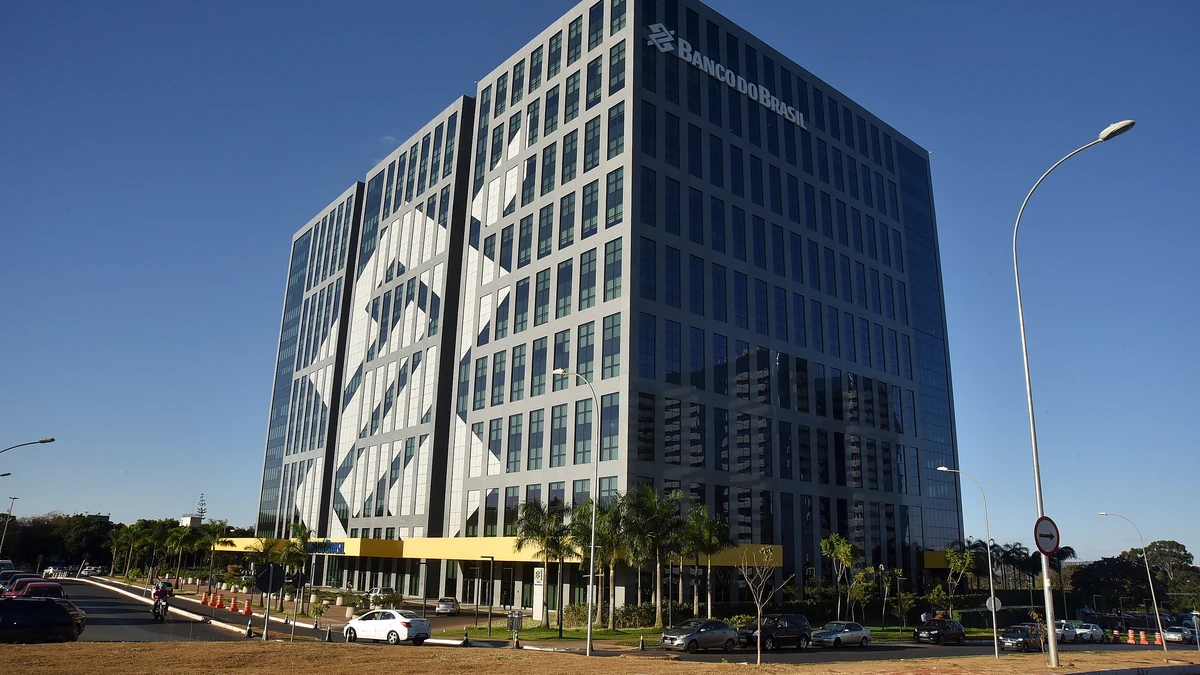
Unpaid Farm Loans Cut Banco do Brasil's Profit by Two-Thirds

Unpaid Farm Loans Cut Banco do Brasil’s Profit by Two-Thirds

Noah Wyle Thought Being Named Sexiest Man Alive Was a Prank

Noah Wyle Thought Being Named Sexiest Man Alive Was a Prank

GLP-1 Side Effects Are Still Being Counted as 11% of US Adults Take Them

GLP-1 Side Effects Are Still Being Counted as 11% of US Adults Take Them

Artemis III Will Stay in Earth Orbit to Test Two Moon Landers

Artemis III Will Stay in Earth Orbit to Test Two Moon Landers

China's AI Export Controls Draw the Line at 2 Trillion Parameters

China’s AI Export Controls Draw the Line at 2 Trillion Parameters

Royal Caribbean Passenger Spent 20 Hours at Sea Inside a Lifebuoy

Royal Caribbean Passenger Spent 20 Hours at Sea Inside a Lifebuoy

Stray Kids, one of the K-pop groups absent from the new Asian Pop Grammy category, at Incheon Airport

The Asian Pop Grammy Will Debut Without BTS or Stray Kids

Age Checks Will Decide Whether the Under-16 Social Media Ban Works

Age Checks Will Decide Whether the Under-16 Social Media Ban Works

Iran Says It Disabled Starlink and Warns It Could Be a Military Target

Iran Says It Disabled Starlink and Warns It Could Be a Military Target

New Members Could Lose Their Vote Under the EU Enlargement Plan

New Members Could Lose Their Vote Under the EU Enlargement Plan

Pakistan's Creator Tax Prices Every 1,000 YouTube Views at Rs195

Pakistan’s Creator Tax Prices Every 1,000 YouTube Views at Rs195

Why the 30-Year Treasury Yield Kept Climbing After the Fed Raised Rates

Why the 30-Year Treasury Yield Kept Climbing After the Fed Raised Rates

Load More

Post navigation

Previous A Dozen States Sue to Block the Paramount-Warner Bros. Merger
Next NASA Backs Four Commercial Moon Missions to Build a Lunar Base

Related Stories

England’s Visitor Levy Bill Puts No Cap on What Mayors Can Charge England's Visitor Levy Bill Puts No Cap on What Mayors Can Charge
  • Article

England’s Visitor Levy Bill Puts No Cap on What Mayors Can Charge

15/11/2026
Inflation Came Up 820 Times on S&P 500 Earnings Calls in October Inflation Came Up 820 Times on S&P 500 Earnings Calls in October
  • Article

Inflation Came Up 820 Times on S&P 500 Earnings Calls in October

14/11/2026
Unpaid Farm Loans Cut Banco do Brasil’s Profit by Two-Thirds Unpaid Farm Loans Cut Banco do Brasil's Profit by Two-Thirds
  • Article

Unpaid Farm Loans Cut Banco do Brasil’s Profit by Two-Thirds

13/11/2026

Recent Posts

  • England’s Visitor Levy Bill Puts No Cap on What Mayors Can Charge
  • Inflation Came Up 820 Times on S&P 500 Earnings Calls in October
  • Unpaid Farm Loans Cut Banco do Brasil’s Profit by Two-Thirds
  • Noah Wyle Thought Being Named Sexiest Man Alive Was a Prank
  • GLP-1 Side Effects Are Still Being Counted as 11% of US Adults Take Them

Categories

Connect with Us

  • Facebook
  • Instagram

You may have missed

England’s Visitor Levy Bill Puts No Cap on What Mayors Can Charge England's Visitor Levy Bill Puts No Cap on What Mayors Can Charge
  • Article

England’s Visitor Levy Bill Puts No Cap on What Mayors Can Charge

15/11/2026
Inflation Came Up 820 Times on S&P 500 Earnings Calls in October Inflation Came Up 820 Times on S&P 500 Earnings Calls in October
  • Article

Inflation Came Up 820 Times on S&P 500 Earnings Calls in October

14/11/2026
Unpaid Farm Loans Cut Banco do Brasil’s Profit by Two-Thirds Unpaid Farm Loans Cut Banco do Brasil's Profit by Two-Thirds
  • Article

Unpaid Farm Loans Cut Banco do Brasil’s Profit by Two-Thirds

13/11/2026
Noah Wyle Thought Being Named Sexiest Man Alive Was a Prank Noah Wyle Thought Being Named Sexiest Man Alive Was a Prank
  • Article

Noah Wyle Thought Being Named Sexiest Man Alive Was a Prank

06/11/2026

Advertise it!

The MW3.News is an international network of information channels.

A variety of web news portals, digital magazines, and other media channels for information flow and marketing services.

Promote your work, services, brand and products with us.

Out of sight, out of mind!
Contact us

Recent Posts

  • England’s Visitor Levy Bill Puts No Cap on What Mayors Can Charge
  • Inflation Came Up 820 Times on S&P 500 Earnings Calls in October
  • Unpaid Farm Loans Cut Banco do Brasil’s Profit by Two-Thirds
  • Noah Wyle Thought Being Named Sexiest Man Alive Was a Prank
  • GLP-1 Side Effects Are Still Being Counted as 11% of US Adults Take Them
  • Home
  • Blog
  • Contact
  • Privacy Policy
  • Cookie Policy (UK)
  • Facebook
  • Instagram
Copyright © - MW3.news Portal - All rights reserved | DarkNews by AF themes.
MW3.News
Manage Consent
To provide the best experiences, we use technologies like cookies to store and/or access device information. Consenting to these technologies will allow us to process data such as browsing behavior or unique IDs on this site. Not consenting or withdrawing consent, may adversely affect certain features and functions.
Functional Always active
The technical storage or access is strictly necessary for the legitimate purpose of enabling the use of a specific service explicitly requested by the subscriber or user, or for the sole purpose of carrying out the transmission of a communication over an electronic communications network.
Preferences
The technical storage or access is necessary for the legitimate purpose of storing preferences that are not requested by the subscriber or user.
Statistics
The technical storage or access that is used exclusively for statistical purposes. The technical storage or access that is used exclusively for anonymous statistical purposes. Without a subpoena, voluntary compliance on the part of your Internet Service Provider, or additional records from a third party, information stored or retrieved for this purpose alone cannot usually be used to identify you.
Marketing
The technical storage or access is required to create user profiles to send advertising, or to track the user on a website or across several websites for similar marketing purposes.
  • Manage options
  • Manage services
  • Manage {vendor_count} vendors
  • Read more about these purposes
View preferences
  • {title}
  • {title}
  • {title}