Skip to content
  • Facebook
  • Instagram
MW3.News

MW3.News

Web News Portal

Connect with Us

  • Facebook
  • Instagram

Categories

Tags

afghan afghanistan afghans biden bolsonaro Boris Johnson brazil Business Celebrities china chinese coronavirus covid covid 19 covid19 covid passport Economy england Europe Fame football freedom green pass Health kabul lockdown Music mw3 news news no green pass no vaccine passports pfizer politics russia Science singer sports taliban travel trump UK USA vaccine vaccine passport war
  • Home
  • About Us
  • Contact
  • Home
  • Featured
  • NASA Backs Four Commercial Moon Missions to Build a Lunar Base
  • Article
  • Featured
  • News
  • USA

NASA Backs Four Commercial Moon Missions to Build a Lunar Base

Will Lisil 14/07/2026
NASA Backs Four Commercial Moon Missions to Build a Lunar Base

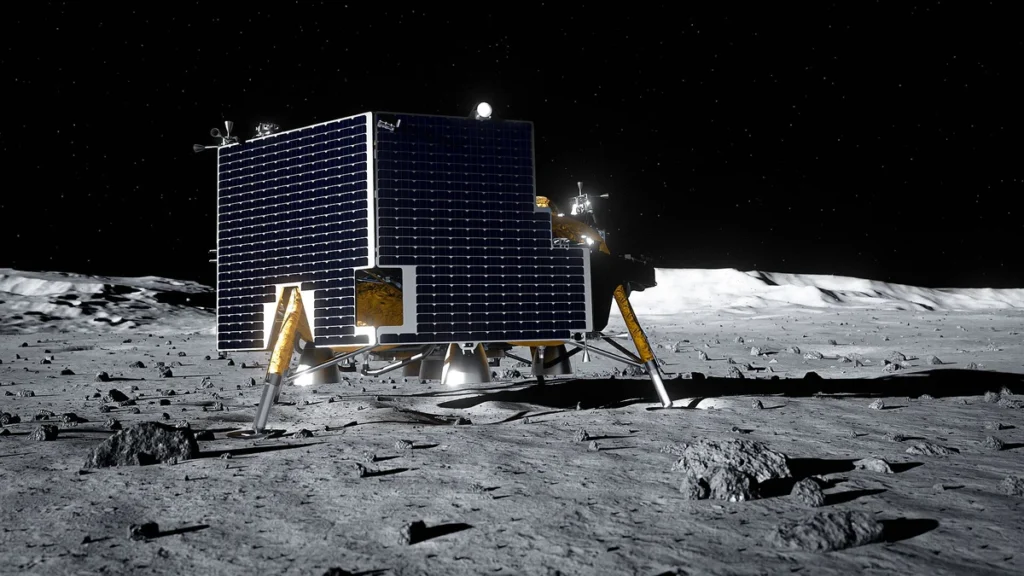
NASA is buying itself a road back to the Moon – and paying private companies to build it. The agency has committed nearly $600 million to four new robotic Moon landings in late 2028, the latest step in an ambitious plan to establish a permanent lunar base by hiring commercial firms to do the flying.

The awards, worth a combined $590.4 million, go to three companies at the heart of America’s new space economy. They are among the most concrete signs yet that the United States intends to make the Moon a place it returns to routinely, not once a generation – and that it will get there by treating trips to the lunar surface as a service to be purchased rather than a spacecraft to be built from scratch.

These commercial Moon missions are modest in cost by the standards of human spaceflight, but strategically they are anything but. Each one is a brick in the foundation of a lunar outpost, and a test of whether a private industry can deliver reliable rides to another world.

Enjoying this article? Get more like it.

Get our latest articles delivered to your inbox.

The Awards

The money is split among three familiar names in NASA’s lunar program. Astrobotic received the largest share, $297.9 million, to carry out two separate deliveries. Firefly Aerospace was awarded $144.2 million and Intuitive Machines $148.3 million, each for a single mission. All four flights are targeted for late 2028.

They fall under the Commercial Lunar Payload Services program, or CLPS, NASA’s mechanism for hiring companies to ferry scientific and technological payloads to the Moon. Rather than designing and operating landers itself, NASA buys space aboard privately built spacecraft – a deliberate shift meant to lower costs and spread work across a competitive field of providers. The June 30 announcement also previewed further opportunities to come, including rovers, communications satellites and additional cargo runs.

What They Will Carry

What makes this batch unusual is that all four landers carry the same trio of instruments, chosen to answer practical questions that a permanent base will need solved. The first, SCALPSS – short for Stereo Camera for Lunar Plume Surface Studies – will study the dangerous cloud of dust and debris kicked up when a spacecraft’s engines fire on landing, a hazard that can damage hardware and obscure the surface.

The second is a Laser Retroreflector Array, a simple but powerful device that lets future spacecraft measure their position relative to the lander with great precision, improving the accuracy of lunar navigation. The third, a Linear Energy Transfer Spectrometer, will map the Moon’s radiation environment – vital data for protecting both equipment and, eventually, the astronauts who will live and work there. Flying the same instruments on multiple landers in different locations turns four separate missions into a coordinated survey.

Building Toward a Moon Base

The instruments hint at the bigger goal: not a flags-and-footprints visit, but a lasting presence. NASA has been open that these deliveries are groundwork for a permanent Moon Base, and the agency’s preview of rovers, communication satellites and more cargo missions sketches the outline of the infrastructure such a base would require – power, mobility, communications and a steady supply chain.

That vision sits within the broader Artemis effort to return astronauts to the lunar surface and build up the capacity to stay. Robotic landers like these go first, scouting conditions, testing technologies and delivering equipment, so that when crews arrive they are not starting from zero. It is the same logic that guided the settlement of any remote frontier: send the supplies and the surveyors ahead of the people.

The Commercial Model and Its Risks

The commercial approach is cheaper and faster than the old way, but it is not a sure thing, and NASA has been candid about that. The CLPS program has produced a genuinely mixed record: some landers have touched down successfully and returned valuable data, while others have failed on the way to the surface or tipped over on landing, cutting their missions short.

The recent history captures both outcomes. Earlier CLPS attempts saw one lander fail to reach the Moon at all and another arrive but topple onto its side, ending operations early, even as a separate mission achieved a clean, fully upright touchdown and worked as intended. The lesson NASA has drawn is not that the model is broken but that it is young: soft-landing on an airless world, with no chance to abort and retry, remains one of the hardest things in spaceflight, and each attempt – success or failure – feeds hard-won data back into the next.

NASA has framed those setbacks as an acceptable price for a portfolio strategy – fly often, with several providers, accept that some attempts will fail, and learn quickly from each. Spreading four missions across three companies reflects exactly that thinking: no single failure derails the program, and competition pushes each firm to improve. For the companies, every flight is both a NASA contract and a proving ground for a commercial lunar-delivery business they hope will outlast any one award.

Why the Moon, Again

Half a century after Apollo, the renewed pull of the Moon is part science, part economics and part geopolitics. Scientifically, the lunar surface holds clues to the history of the solar system and a uniquely stable platform for observation, part of the same wave of exploration reshaping our view of space – from lunar landers to the distant worlds probed in the newest James Webb findings. Economically, water ice at the poles could one day be turned into drinking water, breathable oxygen and rocket fuel, making the Moon a potential waystation for deeper space travel.

That last point is the quiet engine behind the whole endeavour. If usable water can be found and extracted at the lunar poles, a base would not need to haul everything up from Earth at enormous expense; it could, in effect, live partly off the land. The instruments and landers being funded now are early scouts for exactly that possibility – mapping the terrain, the radiation and the hazards that will determine where, and whether, such a base can be built at all.

There is a strategic dimension too. Other nations, China chief among them, are pursuing their own lunar ambitions, and the United States sees sustained presence – and the ability to reach the Moon cheaply and often – as central to remaining the leading power in space. The commercial model is not just about saving money; it is about building an industrial base that can support that presence for decades.

What Comes Next

The immediate work is engineering: the three companies now have roughly two years to prepare their landers and integrate the shared instruments ahead of the 2028 flights. NASA, meanwhile, will move on the further opportunities it has previewed, gradually assembling the pieces of a base program out of individual contracts.

The larger question is whether the commercial-first bet pays off – whether a competitive industry can turn Moon landings from rare, white-knuckle events into something closer to routine deliveries. If it can, the $590 million committed here will look like a bargain down payment on a permanent human foothold beyond Earth. If the failures outnumber the successes, the debate over how America should return to the Moon will only sharpen. For now, the direction is set: the next chapter of lunar exploration will be written, in large part, by private companies on NASA’s dime.


About Post Author

Will Lisil

Director & Digital Creator at MW3.biz Ltd, United Kingdom.

See author's posts

Stay in the loop

Get our latest articles delivered to your inbox.

The First Midterm Convention Asked Members for $25,000
Article Featured News Politics

The First Midterm Convention Asked Members for $25,000

Will Lisil
11/09/2026
The Republican National Committee opened the American Airlines Center in Dallas on 9 September for something no American political party…

Read More..

Mariska Hargitay Won Two Emmys Before Hosting the Emmys
Article Celebrities Featured News

Mariska Hargitay Won Two Emmys Before Hosting the Emmys

Will Lisil
09/09/2026
Most Emmy hosts walk out on the night with nothing at stake. Mariska Hargitay walks out on Monday having already…

Read More..

A Diesel Price Record Just Landed on Your Grocery Bill

A Diesel Price Record Just Landed on Your Grocery Bill

Xi Jinping shakes hands with Abdel Fattah el-Sisi in front of the Chinese and Egyptian flags in Cairo

Xi Jinping’s Egypt Visit Rests on $10bn Already Invested

Five Vigorous Minutes Cut the Cancer Risk of Prolonged Sitting

Five Vigorous Minutes Cut the Cancer Risk of Prolonged Sitting

Two suited engineers work under harsh directional lighting during a NASA lunar surface lighting simulation for Artemis III

Black Mold Could Outlive Every Other Microbe at the Lunar South Pole

A Sticker Defeats the Only Privacy Light on Meta AI Glasses

A Sticker Defeats the Only Privacy Light on Meta AI Glasses

The Life We Dreamt of: Davion Gowie on Time, Money and Faith

The Life We Dreamt of: Davion Gowie on Time, Money and Faith

A Mexican navy sailor in an orange life vest hauls a rope toward two fishermen sitting inside a pale blue fishing cooler on open Pacific swells

Two Fishermen Rescued in a Cooler 150 Miles From Shore

School Phone Bans Cleared the Desks, Then AI Took the Homework

School Phone Bans Cleared the Desks, Then AI Took the Homework

The SCREEN Act Would Turn a VPN Into a Reason to Show ID

The SCREEN Act Would Turn a VPN Into a Reason to Show ID

Total Solar Eclipse Over Spain Lasts Just 108 Seconds

Total Solar Eclipse Over Spain Lasts Just 108 Seconds

The Creator Economy's Top 10% Take 62% of Brand Payments

The Creator Economy’s Top 10% Take 62% of Brand Payments

July Payrolls Fell 23,000 and Unemployment Dropped Anyway

July Payrolls Fell 23,000 and Unemployment Dropped Anyway

Load More

Post navigation

Previous New York Orders the First Statewide Data Center Moratorium
Next Taylor Swift and Travis Kelce Marry at Madison Square Garden

Related Stories

The First Midterm Convention Asked Members for $25,000 The First Midterm Convention Asked Members for $25,000
  • Article

The First Midterm Convention Asked Members for $25,000

11/09/2026
Mariska Hargitay Won Two Emmys Before Hosting the Emmys Mariska Hargitay Won Two Emmys Before Hosting the Emmys
  • Article

Mariska Hargitay Won Two Emmys Before Hosting the Emmys

09/09/2026
A Diesel Price Record Just Landed on Your Grocery Bill A Diesel Price Record Just Landed on Your Grocery Bill
  • Article

A Diesel Price Record Just Landed on Your Grocery Bill

07/09/2026

Recent Posts

  • The First Midterm Convention Asked Members for $25,000
  • Mariska Hargitay Won Two Emmys Before Hosting the Emmys
  • A Diesel Price Record Just Landed on Your Grocery Bill
  • Xi Jinping’s Egypt Visit Rests on $10bn Already Invested
  • Five Vigorous Minutes Cut the Cancer Risk of Prolonged Sitting

Categories

Connect with Us

  • Facebook
  • Instagram

You may have missed

The First Midterm Convention Asked Members for $25,000 The First Midterm Convention Asked Members for $25,000
  • Article

The First Midterm Convention Asked Members for $25,000

11/09/2026
Mariska Hargitay Won Two Emmys Before Hosting the Emmys Mariska Hargitay Won Two Emmys Before Hosting the Emmys
  • Article

Mariska Hargitay Won Two Emmys Before Hosting the Emmys

09/09/2026
A Diesel Price Record Just Landed on Your Grocery Bill A Diesel Price Record Just Landed on Your Grocery Bill
  • Article

A Diesel Price Record Just Landed on Your Grocery Bill

07/09/2026
Xi Jinping’s Egypt Visit Rests on $10bn Already Invested Xi Jinping shakes hands with Abdel Fattah el-Sisi in front of the Chinese and Egyptian flags in Cairo
  • Article

Xi Jinping’s Egypt Visit Rests on $10bn Already Invested

06/09/2026

Advertise it!

The MW3.News is an international network of information channels.

A variety of web news portals, digital magazines, and other media channels for information flow and marketing services.

Promote your work, services, brand and products with us.

Out of sight, out of mind!
Contact us

Recent Posts

  • The First Midterm Convention Asked Members for $25,000
  • Mariska Hargitay Won Two Emmys Before Hosting the Emmys
  • A Diesel Price Record Just Landed on Your Grocery Bill
  • Xi Jinping’s Egypt Visit Rests on $10bn Already Invested
  • Five Vigorous Minutes Cut the Cancer Risk of Prolonged Sitting
  • Home
  • Blog
  • Contact
  • Privacy Policy
  • Cookie Policy (UK)
  • Facebook
  • Instagram
Copyright © - MW3.news Portal - All rights reserved | DarkNews by AF themes.
MW3.News
Manage Consent
To provide the best experiences, we use technologies like cookies to store and/or access device information. Consenting to these technologies will allow us to process data such as browsing behavior or unique IDs on this site. Not consenting or withdrawing consent, may adversely affect certain features and functions.
Functional Always active
The technical storage or access is strictly necessary for the legitimate purpose of enabling the use of a specific service explicitly requested by the subscriber or user, or for the sole purpose of carrying out the transmission of a communication over an electronic communications network.
Preferences
The technical storage or access is necessary for the legitimate purpose of storing preferences that are not requested by the subscriber or user.
Statistics
The technical storage or access that is used exclusively for statistical purposes. The technical storage or access that is used exclusively for anonymous statistical purposes. Without a subpoena, voluntary compliance on the part of your Internet Service Provider, or additional records from a third party, information stored or retrieved for this purpose alone cannot usually be used to identify you.
Marketing
The technical storage or access is required to create user profiles to send advertising, or to track the user on a website or across several websites for similar marketing purposes.
  • Manage options
  • Manage services
  • Manage {vendor_count} vendors
  • Read more about these purposes
View preferences
  • {title}
  • {title}
  • {title}