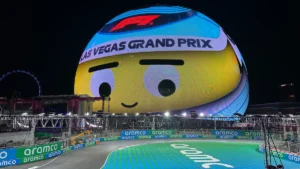
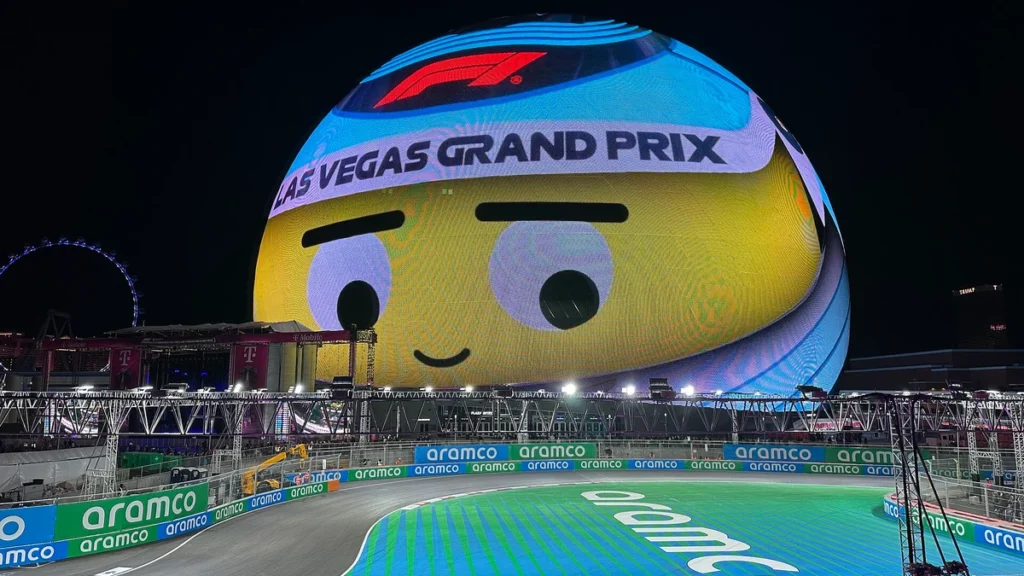
Formula 1 reaches the Las Vegas Strip this week for the first of three races on three consecutive weekends, and the sport cannot say for certain that it will get to the second. The Las Vegas Grand Prix is meant to open a closing triple-header that moves on to Qatar and then Abu Dhabi. Both Gulf rounds are still on the calendar, but F1 has given up its only fallback venue, and renewed attacks in the region over the weekend have revived doubts about the final fortnight.
The arithmetic is simple. If the two Middle East races are called off, Saturday night’s 50 laps around the Strip become the finale, closing a season that was planned for 24 rounds after just 21 of them.
Why Imola Is No Longer Waiting in the Wings
For most of the year F1 kept a European escape route open. In July, chief executive Stefano Domenicali told reporters including Motorsport.com that if racing in the Gulf proved impossible, “the end of the season will be in Europe, because we cannot go in other places.” He ruled out adding another race in the United States, where any extra late-November weekend would have collided with the NFL’s Thanksgiving fixtures, and Imola emerged as the likeliest stand-in.
That option closed on 10 November. An F1 spokesperson told GPFans that Imola had been informed it would not be required, adding: “We cannot let Imola wait indefinitely.” The same statement made the case for going ahead: “Nothing has negatively developed in the region and specifically in Qatar and Abu Dhabi in recent months.” It added that travel advice still allowed travel and that travel insurance remained valid. FIA president Mohammed Ben Sulayem followed with a post that began: “We are ready for Qatar and Abu Dhabi.”
The effect, as RaceFans summed it up, is that F1 has committed to holding its last two rounds in the Middle East or not at all. There is no plan B left on the calendar. Any late setback in the region would simply leave the Las Vegas Grand Prix as the last race of the year, with Kimi Antonelli denied the chance to sign off his title season on home soil in Italy.
What Changed Over the Weekend
Five days after that decision, the security picture moved the wrong way. On Sunday 15 November, Bahrain said its air defences had intercepted several Iranian aerial attacks, the first such interceptions since September, after two warnings that urged residents to seek shelter, The Irish Times reported. Iran’s Revolutionary Guards said they had launched six drones at a US air-defence radar at the Al-Rifaa helicopter base. Two days earlier the Guards had claimed an attack on a US early-warning radar in Bahrain, which the US military denied, saying it had intercepted two drones without any damage.
The wider conflict dates to 28 February, when US and Israeli strikes on Iran began a war that spread across the region, with Tehran launching missile and drone attacks on US bases in Gulf countries. Diplomatic efforts have yet to produce a breakthrough. Formula 1 has already absorbed one round of disruption this season: it cancelled its Bahrain and Saudi Arabian Grands Prix and staged an event carrying the Bahrain Grand Prix name at Malaysia’s Sepang circuit instead.
Writing in Switzerland’s Blick, veteran Formula 1 reporter Roger Benoit questioned whether the three-race finish could still fall through, according to a translation published by F1-Fansite. He pointed to the Bahrain interceptions and to further missile and drone attacks that Saudi authorities attributed to Houthi forces, and concluded that the sport was simply hoping no new reports of attacks would emerge before the teams fly east.
The $100 Million at Stake
Cancelling would be expensive. Benoit put the hosting fees F1 would forgo from the Qatar and Abu Dhabi organisers at more than $100 million. GiveMeSport cited reports placing the two sanctioning fees at a combined $95 million, a sum that even a replacement European round would not have come close to recovering. RaceFans was plainer still, noting that F1 has a financial incentive not to cancel two of its most lucrative races.
Domenicali has framed the Gulf as a long-term commitment rather than a one-season gamble. He told investors that “the disruption we experienced in the Middle East this year does not change our long-term regional strategy and ongoing partnership with our promoters,” according to RaceFans, while stressing that “the safety and security of everyone in the sport will remain our first and foremost priority.” The 2027 season is due to open in Bahrain and Saudi Arabia next March, and in July Domenicali said the two remaining 2026 Gulf races were already sold out.
Other championships have made the opposite call. The World Endurance Championship replaced its Qatar and Bahrain rounds with races in Italy and Spain, the 2027 Dakar Rally has moved from Saudi Arabia to Africa, and the Asian Le Mans Series will run in Europe this winter under a new name. MotoGP, which shares F1’s owner Liberty Media, did race at Losail on 8 November, although Yamaha stayed away and most riders asked the championship for extra guarantees for their security before travelling.
Teams Are Leaving the Choice to Their Staff
Inside the paddock the official line is trust. Mercedes team principal Toto Wolff told the BBC, in comments reported by GPblog: “I believe you need to trust what the authorities say. You need to rely on the commercial rights holder, that’s F1, and the FIA as our governing body.” He also cautioned that “with our social media feed, we are always at risk of seeing what we want to see.”
Yet nobody at Mercedes will be ordered onto the plane. “We don’t want to oblige anyone. There’s not going to be any sanctions, or so on, on teams,” Wolff said. “If you don’t feel right about going there, then I have respect for that, and don’t go.” Benoit reported that Ferrari team principal Frederic Vasseur has taken the same position, leaving the decision on whether to travel to individual employees.
Teams are hedging on the track too. The rules commit each of them to run inexperienced drivers in practice during the season, and according to RaceFans all but two of the 11 have now confirmed they will satisfy that commitment by the end of this weekend, a sign they are taking seriously the possibility that the Gulf sessions never happen. Ferrari and Haas are among those running a practice driver in Las Vegas.
A Title Already Decided, a Runner-Up Fight Still Open
None of this touches the championship itself. Kimi Antonelli sealed the drivers’ title in Mexico City on 1 November, finishing third to become Formula 1’s youngest world champion at 20 years and 68 days, beating Sebastian Vettel’s record by more than three years. The Mercedes driver’s first career win came in China in the second round, the start of a run of five consecutive victories, and in September he left Madrid 81 points clear with nine races left. Mercedes has since wrapped up the constructors’ crown as well.
Second place is still live. Red Bull’s Max Verstappen holds it on 279 points, 17 clear of George Russell on 262, with Lewis Hamilton a single point further back on 261 for Ferrari. Charles Leclerc on 251 and Lando Norris on 246, who won the most recent race in Brazil for McLaren, complete the top six. If the season does end on Saturday, those positions will be settled on the Strip rather than in Abu Dhabi.
What the Strip Offers on Saturday Night
The race itself has become a fixture. This is the first Las Vegas Grand Prix since the promoters announced a new 10-year contract, RaceFans noted, after an inaugural 2023 event remembered for a drain cover that badly damaged Carlos Sainz’s Ferrari in practice. Verstappen won that first race and again in 2025, while Russell led a Mercedes one-two in 2024.
The 6.201-kilometre layout runs 50 laps and 17 corners, with a 1.9-kilometre straight in the third sector. That straight is a problem for this year’s cars: RaceFans expects the energy-starved 2026 power units to struggle on the long acceleration zones, where drivers wait a long time between chances to recharge. The forecast adds a chill, with highs of 5 to 7C across the weekend and a 60% chance of showers during Thursday’s practice. In the United States, the race is free to watch on Apple TV.
For now, the plan is still three races in three weekends. Whether Qatar and Abu Dhabi happen will be decided by events far from the Strip, and the teams have prepared for either outcome. If the Gulf rounds go ahead, Las Vegas is the opening act of the finale. If they do not, the Las Vegas Grand Prix is the finale.